You bring home a tray of mushrooms on Monday, and by Thursday they are slimy, dark, and headed for the bin. Sound familiar? It frustrates home cooks, and it hurts even more for small growers who watch their harvest lose value before it reaches a customer.
Here is the good news: the mushrooms are rarely the problem. The packaging usually is. The right mushroom packaging ideas can add days to shelf life, cut waste, and protect flavor and texture. In this guide, you will learn why mushrooms spoil so quickly, which materials work best, and simple steps you can use today, whether you are stocking your fridge or filling market crates.
Why Mushrooms Spoil Faster Than Most Produce
Mushrooms are not like carrots or apples. They are delicate, and their biology works against you the moment they leave the growing room.
They Keep Breathing After Harvest
A picked mushroom is still active. It keeps taking in oxygen and releasing carbon dioxide and moisture. That process speeds up in warm conditions, which is why a long, warm ride home from the store can quietly shorten their life.
Moisture Is a Double-Edged Sword
Mushrooms are roughly 90 percent water. Trap that moisture in sealed plastic and condensation forms, creating the slippery film everyone dreads. Leave them in open air and they shrivel into leathery little caps. Good packaging walks the line between the two.
Early Warning Signs to Watch For
- A sticky or slimy surface
- Dark, wet-looking patches on the caps
- A sour or ammonia-like smell
- Wrinkled, dried-out caps
Some darkening on the gills is normal with age. Slime and a strong odor, however, mean it is time to say goodbye.
What Good Mushroom Packaging Needs to Do
Before comparing materials, it helps to understand the job description. Great packaging does three things at once.
Manage Airflow and Humidity
Think “breathable,” not “airtight.” The ideal package lets extra moisture escape while holding enough humidity to keep caps plump.
Protect Without Crushing
Mushrooms bruise easily, and bruised spots are usually the first to spoil. Shallow trays, sturdy walls, and a little cushioning keep caps intact from harvest to kitchen.
Stay Cool and Clean
Cold storage matters as much as the container. Mushrooms keep best in the fridge at roughly 2 to 4°C (36 to 40°F). Any material touching them should also be food-safe and clean.
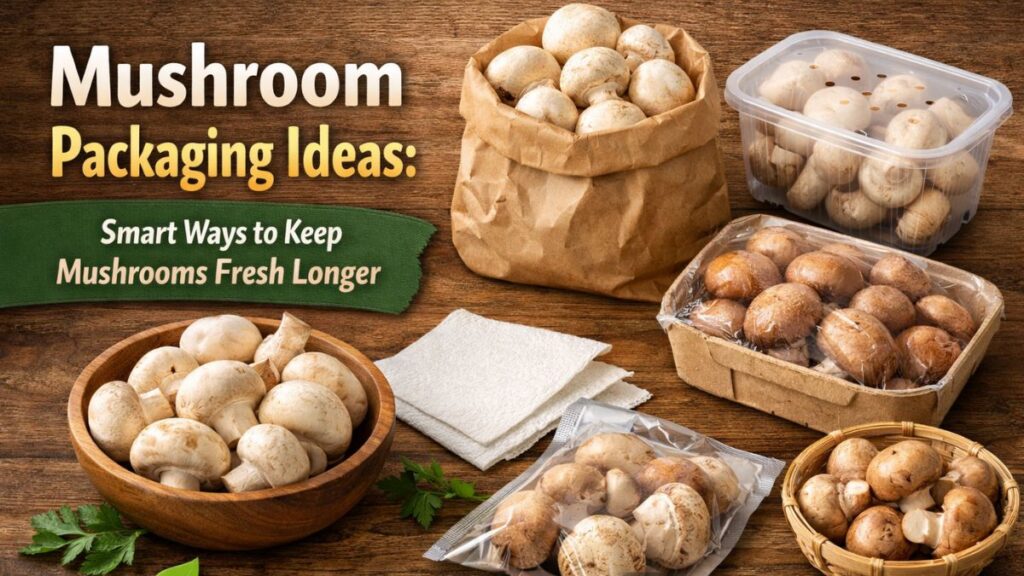
Practical Mushroom Packaging Ideas for Growers and Sellers
If you grow or sell mushrooms, packaging is part of the product. These options balance freshness, cost, and shelf appeal.
Paper Bags
Simple, cheap, and surprisingly effective. Paper absorbs surface moisture and lets mushrooms breathe, which makes it a favorite for farmers’ markets and quick-turnaround sales. The downside is limited crush protection, so avoid stacking heavy bags. A bag with a small window also lets customers see what they are buying.
Vented Pulp or Cardboard Trays
Molded pulp trays cushion mushrooms and soak up a bit of moisture. Look for designs with ventilation slots so air can move around the caps. They work well for sturdier varieties like button and cremini.
Trays with Microperforated Film
This is the classic supermarket setup: a tray covered with thin film that has tiny laser-cut holes. It gives buyers a clear view and extends shelf life when the perforations are sized correctly. Too few holes and condensation builds up. Too many and the mushrooms dry out, so test small batches first.
Absorbent Pads
A food-grade absorbent pad tucked under the mushrooms catches excess liquid before it turns into slime. It is a low-cost upgrade that makes a visible difference in sealed trays.
Eco-Friendly Mushroom Packaging
Customers increasingly notice what their food comes in. Options include:
- Compostable molded pulp trays
- Recycled or FSC-certified paper bags
- Plant-based compostable films
- Mycelium-based cushioning, grown from mushroom roots, which is a great story for shipping boxes
One tip: some compostable films do not breathe the way perforated plastic does. Run a small shelf-life test before ordering in bulk.
How to Store Mushrooms in the Fridge at Home
You do not need fancy materials to get results. Knowing how to store mushrooms in the fridge properly is the easiest way to keep mushrooms fresh longer, and it costs almost nothing.
Swap Plastic for Paper
If your mushrooms came in a sealed plastic wrap, open it up. Move them into a paper bag or a container lined with a paper towel. The paper absorbs moisture instead of letting it pool.
Try the Paper Towel Method
- Line a shallow container with a paper towel.
- Spread the mushrooms in a single layer.
- Cover loosely with another paper towel.
- Close the lid slightly ajar.
- Swap in a fresh towel if it feels damp.
Pick the Right Spot
The middle shelf is usually steadier in temperature than the door. Keep mushrooms away from strong-smelling foods like onions or fish, because they soak up odors easily.
Wash Only When You Cook
Extra water speeds up spoilage. Wipe them with a damp cloth or give them a quick rinse right before cooking, then pat dry.
Choosing the Best Packaging for Fresh Mushrooms by Variety
Not every mushroom behaves the same. Matching the package to the variety makes a real difference.
Button, Cremini, and Portobello
These are firm and forgiving. A paper bag or vented tray with an absorbent pad works well. Portobellos benefit from being laid cap-up in a single layer so the gills do not get crushed.
Oyster and Shiitake
Oyster mushrooms are fragile and grow in clusters, so shallow, breathable cartons that avoid stacking are ideal. Shiitakes are a little sturdier and do nicely in paper bags or open-vented containers.
Enoki and Other Delicate Types
Enoki usually arrives sealed in thin film from the grower. Once opened, wrap the rest in a paper towel, keep it cold, and use it within a few days. Delicate wild varieties like chanterelles also prefer paper over plastic.
Smart Sizing: Pack What You Can Sell or Cook
Oversized packages hurt freshness. Once opened, mushrooms in a half-empty container age faster.
Match Package Size to Real Portions
For home cooks, buy what you will use within about five days. For sellers, offering small and medium sizes such as 200 g or 250 g and 500 g helps customers buy what they need, which cuts waste on both sides.
Plan Your Packaging Before Harvest Day
Running out of trays mid-harvest is a stressful way to spend a Saturday. If you pack for markets or shipping, the Mushroom Packaging Calculator can help you work out how much packaging to prepare for your harvest, so you do not over-order or come up short.
Common Mistakes That Shorten Shelf Life
A few small habits quietly shorten mushroom life. Watch out for these:
- Sealing wet mushrooms in airtight plastic
- Washing them before storing
- Packing trays too deep or overfilling bags
- Leaving them at room temperature for hours
- Mixing older mushrooms with fresh ones
Fix even two of these and you will notice the difference within a week.
FAQs
How long do mushrooms last in a paper bag?
Fresh button mushrooms typically stay in good shape for about five to seven days in a fridge-cold paper bag, depending on how fresh they were when you bought them.
Is it okay to keep mushrooms in their original plastic container?
Yes, if the package is unopened and vented. Once you open it, switch to a paper bag or a paper-towel-lined container so moisture does not build up.
Can I freeze mushrooms to make them last longer?
Yes, but raw mushrooms turn mushy after freezing. Sauté them lightly first, cool them, and freeze in airtight bags for the best texture.
What is the best packaging for selling fresh mushrooms?
For most sellers, a vented pulp tray with microperforated film or a simple paper bag works well. Choose based on your variety, selling window, and budget.
Final Thoughts
Keeping mushrooms fresh does not require expensive gear. It comes down to airflow, moisture control, and gentle handling. Whether you are a home cook rescuing your weekly grocery haul or a grower protecting your income, a few smart packaging choices go a long way.