Ask any grower why a promising flush suddenly stalled, and moisture is usually hiding at the root of it. Understanding mushroom moisture content is one of those quiet skills that separates a frustrating hobby from a reliable harvest. Mushrooms are mostly water, often 85 to 95 percent of their fresh weight, so the moisture in your substrate, in the air, and inside the fruiting body shapes everything from pin formation to shelf life.
The tricky part? You can’t reliably eyeball it. A substrate that looks damp on top can be bone-dry in the core, and air that feels humid to you might be too dry for a baby pin. In this guide, you’ll learn what the right moisture levels actually are, how to measure them without fancy lab gear, and the small adjustments that push yields up while keeping contamination down.
Why Moisture Is the Hidden Driver of Mushroom Growth
Mushrooms don’t have roots, leaves, or a way to store water the way plants do. They pull almost everything they need directly from their growing medium and the surrounding air. That makes them unusually sensitive to even small swings in moisture.
When conditions are right, mycelium colonizes quickly, pins form evenly, and caps grow firm and heavy. When moisture drifts out of range, the warning signs show up fast:
- Too dry: aborted pins, cracked or leathery caps, slow colonization, and thin, lightweight fruits
- Too wet: bacterial blotch, soggy substrate, poor oxygen exchange, and a welcome mat for mold
Water Content vs. Humidity: Two Different Things
People often blur these together, but they’re separate levers:
- Substrate moisture is the water held inside your grain, straw, sawdust, or compost. It feeds the mycelium.
- Air humidity is the water vapor around the fruiting mushrooms. It stops developing caps from drying out.
You can have perfectly moist substrate and still get stunted mushrooms if your air is too dry, and vice versa. A strong harvest means managing both at once.
Mushroom Moisture Content Ideal Levels for Each Growth Stage
Here’s where precision pays off. The “right” moisture isn’t a single number. It shifts as your mushrooms move through their life cycle.
Substrate Moisture Targets
Most popular substrates perform best in a fairly narrow band:
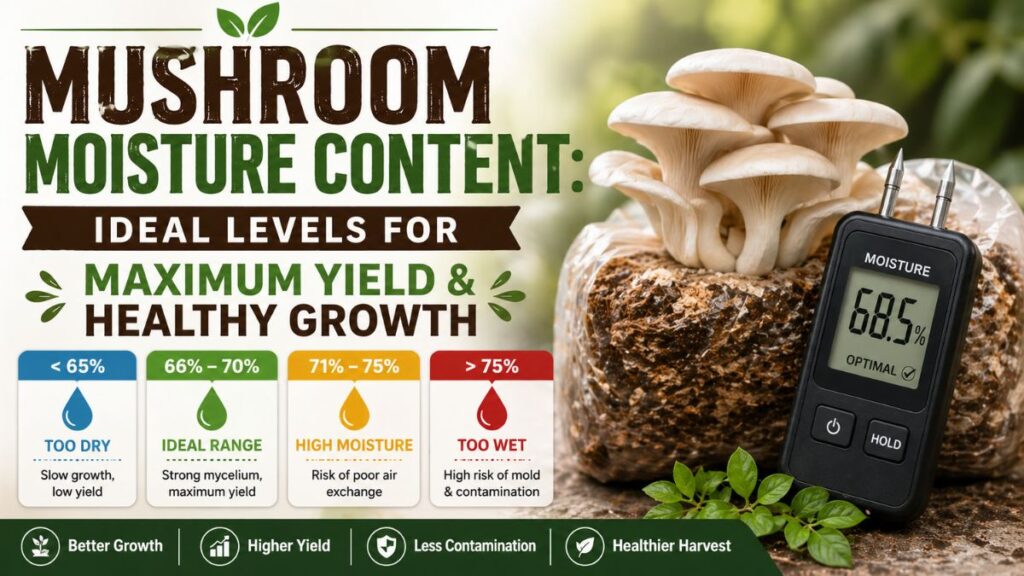
- Straw-based substrates: around 65–75% moisture
- Hardwood sawdust and supplemented blocks: roughly 55–65%
- Grain spawn: about 45–55% (deliberately drier to prevent clumping and contamination)
- Compost (for button mushrooms): typically 60–68%
A simple field test: squeeze a handful of hydrated substrate. A few drops should trickle out, not a stream and not nothing at all. If water pours out freely, it’s waterlogged. If you can’t coax out a single drop, it’s too dry.
Air Humidity by Stage
The air around your mushrooms needs different treatment depending on what’s happening:
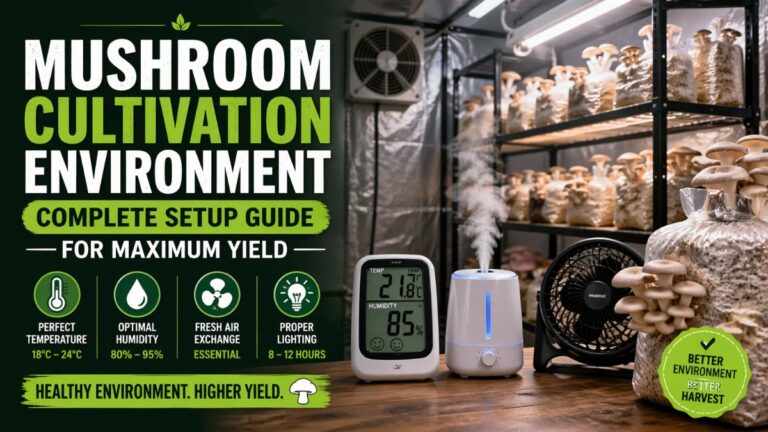
- Colonization: 85–90% relative humidity, with limited fresh air
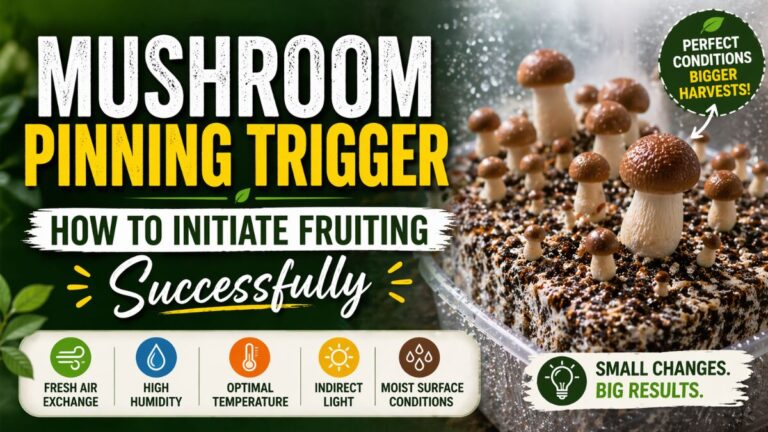
- Pinning: 90–95% RH to trigger and protect tiny pins
- Fruiting: 80–90% RH, now with more fresh air exchange and gentle airflow
During fruiting, the balance between humidity and airflow is everything. High humidity keeps caps from drying, but stagnant wet air invites disease. Short, frequent bursts of fresh air usually beat one long blast.
How to Measure Moisture Accurately
You don’t need a laboratory to get this right, but you do need to stop guessing.
Tools That Actually Help
- Hygrometer: a cheap digital one tells you air humidity at a glance. Place it near the fruiting level, not the ceiling.
- Kitchen scale: the backbone of accurate substrate moisture. Weigh dry material, weigh it after hydrating, and you can calculate exactly how much water you added.
- Moisture meter: handy for larger grows, though readings vary by substrate type, so calibrate against the squeeze test.
If you’d rather skip the arithmetic, run your numbers through a Mushroom Moisture Content Calculator to dial in the exact water-to-substrate ratio before you ever pack a bag. It takes the trial and error out of hydration and helps you repeat your best results batch after batch.
The Oven-Dry Method for Serious Growers
Want a true percentage? Weigh a small sample, dry it fully in a low oven, then weigh it again. The difference, divided by the original wet weight, gives your exact moisture content. It’s the most accurate approach and worth doing once per substrate recipe so you know your baseline.
Dialing In Moisture for Popular Mushroom Varieties
Different species have different appetites for water, so a one-size-fits-all number will let you down.
Oyster Mushrooms
Oysters are forgiving and fast, which is why beginners love them. Aim for straw or sawdust in the 65–70% range. Many growers chase the right oyster mushroom moisture content percentage because these mushrooms reveal problems quickly. Curling, cracked caps scream “too dry,” while slimy clusters mean too wet. Keep fruiting humidity around 85% with steady airflow.
Button and Cremini Mushrooms
These compost-grown varieties prefer a casing layer kept consistently moist through light, regular misting. The casing is your moisture reservoir, so never let it dry out during pinning.
Shiitake
Shiitake logs and blocks like a good soak between flushes. After harvesting, submerging a block in cold water for several hours often triggers the next round of pins by shocking the mycelium back into fruiting mode.
Lion’s Mane and Specialty Types
Lion’s mane is thirsty and especially prone to drying. Its delicate spines turn pink or brown when humidity drops. Keep RH on the higher side, around 90–95%, and avoid direct airflow hitting the fruit.
Common Moisture Mistakes (and Easy Fixes)
Even experienced growers trip over the same few issues. Here’s how to catch them early.
Overwatering During Fruiting
Misting directly onto mushroom caps feels helpful but often causes bacterial spotting and waterlogged pins. Fix: mist the walls and air of your chamber, not the mushrooms themselves. You’re humidifying the environment, not watering a garden.
Dry Pockets in the Substrate
Uneven hydration leaves patches that never colonize. Fix: mix thoroughly and let hydrated substrate rest for several hours before inoculating so water distributes evenly.
Ignoring Evaporation
A fruiting chamber loses moisture constantly through evaporation and every time you open it. Fix: check your hygrometer daily and learn how to measure mushroom substrate moisture over time, not just at setup. What was perfect on day one can be too dry by day four.
Chasing a Magic Number
Many first-timers obsess over hitting an exact figure and forget the goal: healthy, firm mushrooms. If your caps look plump, your pins survive, and contamination stays low, your moisture is working, even if the hygrometer reads slightly off target. Learn to read the mushrooms, not just the meter.
Moisture and Post-Harvest Quality
Moisture doesn’t stop mattering once you pick. Fresh mushroom water content directly affects how long your harvest lasts and how it’s priced if you sell.
- Too wet at harvest: mushrooms spoil faster, go slimy, and lose shelf appeal
- Properly managed: firm texture, longer storage, better weight-to-quality ratio
Understanding fresh mushroom water content for storage helps you decide when to harvest (slightly before full maturity for better keeping) and how to store (breathable paper, not sealed plastic that traps condensation). If you’re drying mushrooms for preservation, pull the moisture down to around 10% or lower so they snap rather than bend.
Quick Reference: Moisture at a Glance
Keep this handy as you grow:
- Grain spawn: 45–55% moisture, drier on purpose
- Straw substrate: 65–75% moisture
- Sawdust blocks: 55–65% moisture
- Colonization air: 85–90% RH
- Pinning air: 90–95% RH
- Fruiting air: 80–90% RH with fresh airflow
- Dried storage: under 10% moisture
Frequently Asked Questions
What is the ideal moisture content for mushroom substrate?
It depends on the material, but most substrates land between 55% and 75%. Straw sits higher (65–75%), sawdust blocks lower (55–65%), and grain spawn lowest (45–55%) to resist contamination. The squeeze test, a few drops and not a stream, is a reliable field check.
How do I know if my mushroom substrate is too wet?
Squeeze a handful. If water runs out freely or the substrate feels soggy and heavy, it’s too wet. Other signs include slow colonization, a sour smell, and green or black mold taking hold. Let it drain or mix in dry material to correct it.
What humidity should a fruiting chamber be?
Most mushrooms fruit well at 80–90% relative humidity, with pinning preferring the higher end around 90–95%. Pair that humidity with regular fresh air exchange. Stagnant, overly wet air causes more problems than it solves.
Can mushrooms get too much water?
Yes. Excess moisture starves the mycelium of oxygen, encourages bacteria and mold, and produces soggy, short-lived fruits. The environment should be humid, but the substrate should be moist and breathable, never waterlogged.
Final Thoughts
Moisture is the lever most growers underestimate and the one that rewards attention the fastest. Once you understand the right mushroom moisture content for your species and growth stage, you stop fighting random failures and start producing consistent, heavy flushes.