You bought quality spawn, followed the substrate recipe to the gram, and sealed everything with care. Three weeks later you’re looking at patchy pins, stalled mycelium, or a fuzzy green patch of mold. Sound familiar? For most growers, the problem isn’t the mushrooms. It’s the room around them. Your mushroom cultivation environment decides how fast mycelium spreads, whether pins form, and how big your flush gets. This guide shows which conditions matter, which numbers to aim for, and how to build a space that fruits reliably, even if you’re starting with a spare shelf.
Why Your Mushroom Cultivation Environment Decides Your Yield
Mushrooms don’t photosynthesize, and they don’t drink like plants. They respond to the air around them: its temperature, moisture, oxygen, and cleanliness. Get those right and even a basic substrate fruits generously. Get them wrong and the best genetics will underperform.
The four pillars every grower must control
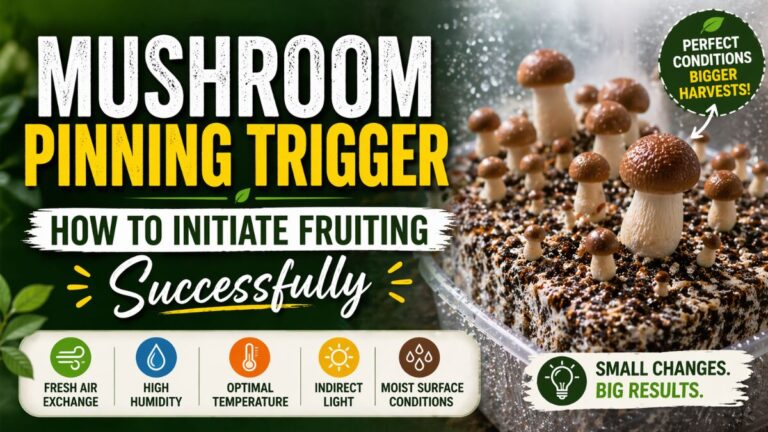
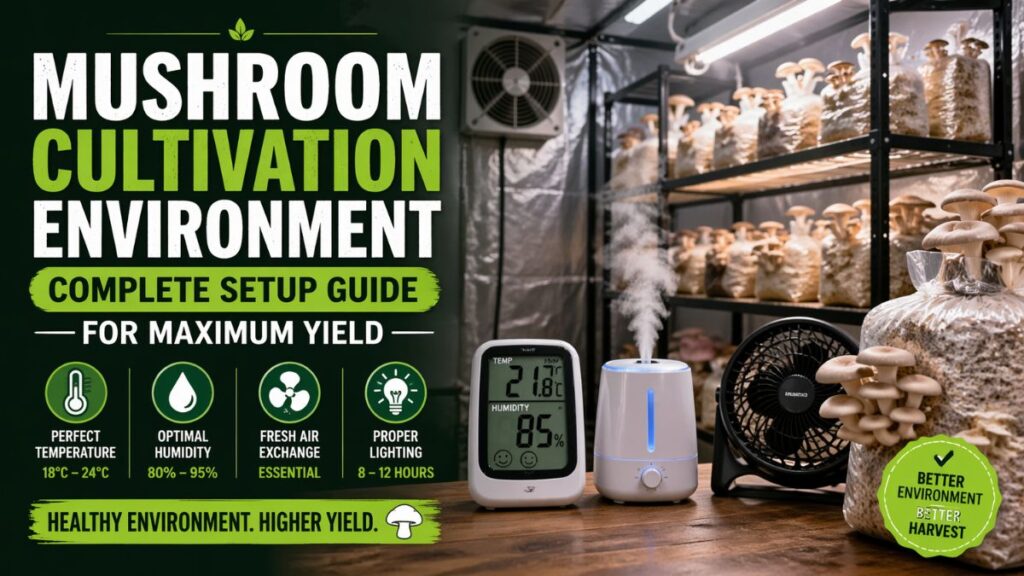
Think of your grow space as a life-support system. Four dials matter most:
- Temperature: controls how fast mycelium colonizes and whether it fruits at all
- Humidity: keeps young pins from drying out and aborting
- Fresh air exchange (FAE): supplies oxygen and clears the CO₂ mushrooms exhale
- Cleanliness: decides whether your spawn or a mold spore wins the race
Lighting, shelf layout, and container choice all play supporting roles.
What happens when conditions drift
Small swings cause big problems:
- A room that’s too warm invites contamination.
- Air that’s too dry makes pins crust over and die.
- Too little fresh air gives you long, stringy stems with tiny caps.
These failures often look like bad luck. Usually they’re just a thermostat, a hygrometer, or a fan that’s slightly off, and every one of them is fixable.
Temperature: Getting the Numbers Right
Set temperature first. Mushrooms want different conditions at different life stages.
Colonization vs fruiting temperatures
During colonization, mycelium wants warmth and stability while it eats through the substrate. At fruiting, most species prefer a slight drop, which signals that it’s time to produce mushrooms.
Best temperature for mushroom fruiting by species
Starting ranges for popular, beginner-friendly varieties:
- Oyster: colonize at 24–27°C, fruit at 18–24°C
- Button/cremini: colonize at about 24°C, fruit at 16–18°C
- Lion’s mane: colonize at 21–24°C, fruit at 18–21°C
- Shiitake: colonize at 24–27°C, fruit at 14–18°C
Treat these as starting points and check your specific strain’s requirements.
Common temperature mistakes
- Chasing the perfect number and ignoring stability. Wild swings stress mycelium more than a slightly-off steady temperature.
- Trusting air temperature over substrate temperature. Active colonization generates heat, so a block can run several degrees warmer than the room.
- Forgetting the seasons. A corner that’s perfect in winter can overheat in summer. Put a thermometer at shelf height and check it daily.
Humidity and Moisture Control
Fruiting bodies are mostly water, and they pull it from the air as they grow. If temperature gets mushrooms started, humidity keeps them alive.
Ideal humidity for growing mushrooms indoors
Most species fruit best at 80–95% relative humidity. Below that, caps crack and pins abort. Above it, standing moisture invites bacterial blotch and mold.
A practical approach:
- Aim for 90% or higher during pinning
- Ease it down slightly once mushrooms are established
- Always pair high humidity with gentle airflow, because wet, stagnant air is a contamination trap
Tools to maintain humidity
You don’t need expensive gear:
- Spray bottle: the cheapest option; mist the air and walls, not the mushrooms
- Grow tent or humidity tent: traps moisture and simplifies control
- Ultrasonic humidifier on a timer: the most consistent choice for bigger setups
- Damp perlite trays: release moisture slowly and buffer swings
Track everything with a hygrometer. Guessing is where most beginners lose their crop.
Fresh Air Exchange and CO₂ Management
This is the pillar new growers overlook most, and it’s the fix for those odd mushrooms with giant stems and tiny caps.
Fresh air exchange for mushroom cultivation
Mycelium breathes out carbon dioxide as it grows. A little extra CO₂ can help during colonization, but during fruiting it tells mushrooms to stretch tall instead of forming proper caps.
For good fresh air exchange for mushroom cultivation:
- Open your grow space for a few minutes several times a day, or
- Run a small fan on a timer to swap stale air for fresh
- Keep airflow gentle, because direct wind dries pins; aim it across the space, not at the mushrooms
- Remember that shiitake and lion’s mane are especially fussy about air
Signs of too much CO₂
Your mushrooms will tell you when the air is stale:
- Long, thin, leggy stems
- Small or underdeveloped caps
- Pins that form but never mature
If you see these, increase airflow before changing anything else. It’s almost always the culprit.
Light, Cleanliness, and Space
These final details turn a decent setup into a dependable one.
Light requirements
Mushrooms don’t use light for energy, but many species use it as a signal for direction and fruiting. Low, indirect light is plenty:
- A few hours of ambient daylight or a basic LED on a timer works
- Direct sun is a mistake, since it heats and dries the space
- A good rule: if you can comfortably read in the room, there’s enough light
Sterility and contamination prevention
- Wipe surfaces and wash hands (or wear gloves) when spawning
- Keep your fruiting area separate from where you handle substrate
- Remove contaminated blocks immediately, because one moldy block can seed the whole room
- Avoid dark, warm, stagnant corners, where problems breed
Space and layout
- Leave gaps between blocks so air can circulate
- Use vertical shelving to grow more in a small footprint
- Position humidifiers and fans so every shelf gets even conditions, not just the middle one
How to Set Up a Mushroom Growing Room, Step by Step
Here’s a simple sequence for building your space from scratch.
Your seven-step setup
- Pick your spot. Choose a room or tent you can keep clean, shaded from direct sun, and away from cooking areas and pets.
- Set temperature first. Add a thermometer, confirm your species’ range, and adjust heating or cooling for stability.
- Add humidity control. Install a humidifier or humidity tent plus a hygrometer, targeting 80–95% during fruiting.
- Plan your fresh air. Position a small fan or schedule daily airing.
- Add gentle light. An LED on a timer or indirect daylight is enough.
- Clean and stage. Sanitize surfaces and separate work zones before bringing in colonized substrate.
- Monitor daily. Check your readings every day for the first few weeks and change one variable at a time.
Want exact target numbers for your species instead of memorizing ranges? Run them through the Mushroom Cultivation Environment Optimizer and skip the guesswork on temperature, humidity, and airflow.
Quick troubleshooting cheat sheet
- Pins dry out and die: raise humidity and reduce direct airflow
- Long stems, tiny caps: increase fresh air
- Green or black patches: remove the block, clean the area, and check temperature
- Slow colonization: check substrate temperature, which may be lower than room temperature
- Sticky, slimy caps: lower humidity slightly and improve air movement
Frequently Asked Questions
What is the most important factor in a mushroom growing environment?
No single factor wins. Temperature, humidity, and fresh air work together. Fresh air is the one beginners neglect most, and fixing it solves common problems like stretched stems and tiny caps.
How do I keep humidity high without causing mold?
Combine high humidity with steady, gentle airflow. Moisture plus stagnant air is what breeds mold. Mist the walls and air rather than the mushrooms, use a hygrometer to avoid overshooting, and remove contaminated blocks right away.
Can I grow mushrooms at room temperature?
Yes, many species like oyster mushrooms tolerate normal indoor temperatures, especially during fruiting. Stability matters most. A steady 20–22°C beats a room that swings between hot afternoons and cold nights.
Do mushrooms need light to grow?
Not for energy, but many need a little light as a signal to fruit and orient properly. A few hours of low, indirect light is enough. Skip direct sunlight, which overheats and dries the space.
Final Thoughts
Great harvests aren’t luck. They come from a well-tuned environment. Once you understand how temperature, humidity, fresh air, and cleanliness work together, you stop reacting to failures and start preventing them. Start small, change one variable at a time, and watch your yields climb. Pick the one dial you’ve been ignoring (probably airflow) and fix it today.