You check your grow bag on day six and notice a patch of something that wasn’t there yesterday. Is it healthy mycelium or trouble? Every grower has asked that question, from beginners with a single monotub to small farms running hundreds of blocks.
Mushroom contamination is the most common reason grows fail, and it’s rarely bad luck. Most losses trace back to a few fixable habits. This guide shows you how to recognize warning signs early, tell harmless quirks from real threats, build a prevention routine that works, and decide what to do when a batch goes wrong.
Understanding Mushroom Contamination: Why It Happens
Your substrate is a buffet for everyone
Mushroom mycelium loves a moist, nutrient-rich environment. So do molds, bacteria and yeasts. The difference is speed. Many contaminants grow faster than mycelium, so if they get a head start, they win.
Contamination isn’t a sign you’re a bad grower. It’s a sign that something gave competitors an opening. Your job is to close those openings.
The three usual entry points
Nearly every contamination problem comes from one of these:
- The substrate or grain: Survivors from incomplete sterilization or pasteurization.
- The air: Spores drifting in while you inoculate, open bags or mist.
- The tools and hands: Unclean knives, syringes, jars or gloves.
Once you know where contaminants come from, troubleshooting stops feeling like guesswork.
How to Spot Contaminated Mushroom Substrate Early
Catching a problem on day three instead of day ten saves you time, money and the rest of your batch.
What healthy mycelium looks like
Healthy mycelium is usually white, though some species turn slightly yellow or blue-tinged when bruised. It grows in a fluffy or rope-like pattern, smells earthy and fresh, and spreads steadily outward.
Red flags to watch for
Trust your eyes and your nose. Be suspicious of:
- Unusual colors: Green, black, blue, orange, pink or gray patches.
- Slimy or wet-looking areas: Especially on grain or the bag surface.
- Sour, rotten or fermenting smells: Think rotten apples, sour milk or wet garbage.
- Fast, wispy growth: Anything that races across the substrate in a day or two.
- Stalled colonization: Mycelium that stops advancing while something else spreads.
If you ever aren’t sure, take a photo, isolate the container and watch it for a day. Mycelium grows steadily. Contaminants tend to change visibly fast.
Green Mold on Mushroom Substrate and Other Common Troublemakers
Trichoderma (the infamous green mold)
Green mold on mushroom substrate is usually Trichoderma. It starts as a thin white patch that can easily be mistaken for mycelium. Within a day or two, it turns dark green as it produces spores. Once you see green, the spore count is already high, so don’t open the container indoors.
Cobweb mold vs mycelium
Cobweb mold is a classic source of confusion. It grows very fast, looks gray and wispy, and often spreads like fine spider silk, usually reaching up and away from the substrate. True mycelium is usually denser and sticks closely to the surface. A quick test: cobweb mold tends to collapse or look “deflated” when touched, and mycelium doesn’t.
Bacterial wet spot and sour rot
Bacterial contamination shows up as slimy, wet patches on grain, often with a sour smell. Overly wet grain and under-sterilized jars are common causes. On fruiting mushrooms, bacterial blotch appears as yellow to brown sticky spots, often linked to water pooling on the caps.
Other contaminants you may meet
- Penicillium and Aspergillus: Blue-green, yellow-green or black molds. Aspergillus can be a respiratory concern, so wear a mask when handling it.
- Neurospora: A fast, orange, powdery mold that spreads aggressively.
- Yeast: Often shows as a smooth, cream-colored slime with a fermented smell.
Prevention: Build Your Defense Before You Inoculate
Prevention is cheaper, easier and far less frustrating than cleanup. Focus on a few strong habits.
Sterilize and pasteurize properly
- Use a pressure cooker or autoclave at about 15 psi for grain and supplemented substrates. Large bags need more time than small jars, so follow a tested schedule for your container size.
- Heat-pasteurize bulk substrates like straw according to a reliable method, and let them cool before inoculating.
- Never add spawn to a hot substrate, because it kills the mycelium.
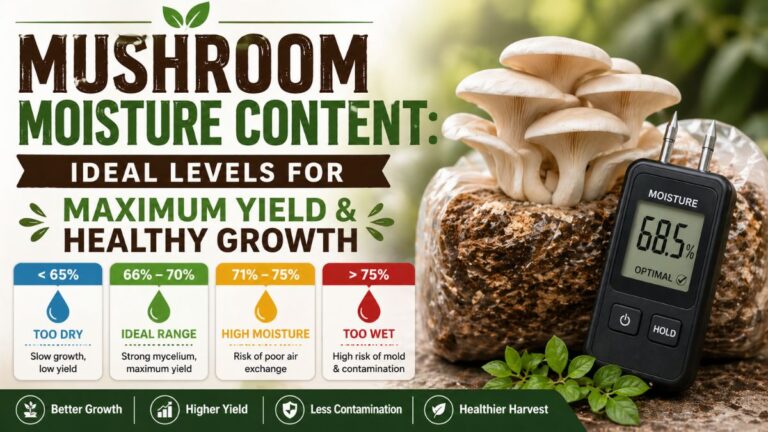
- Get your moisture right. Overly wet grain feeds bacteria, and dry grain stalls growth. Properly hydrated grain should feel moist but not clump or leave puddles.
Control your workspace
- Clean surfaces with isopropyl alcohol before every session.
- Work in a still-air box or in front of a flow hood if you can.
- Shut off fans and close doors and windows while you inoculate.
- Wash your hands and wear clean gloves, and consider tying back long hair.
- Flame-sterilize or alcohol-wipe tools between every use.
Prevent contamination in mushroom grow bags
Grow bags are convenient, but their filter patches and seals can be weak points. To prevent contamination in mushroom grow bags:
- Inspect each bag for pinholes before filling.
- Seal bags tightly and keep the filter patch clear.
- Inoculate with healthy, active spawn. A higher spawn ratio, such as 10% or more by weight, gives mycelium a stronger head start.
- Keep colonizing bags away from fruiting rooms and decaying organic matter.
- Incubate at the right temperature for your species, because a stressed culture is an easy target.
Manage your fruiting environment
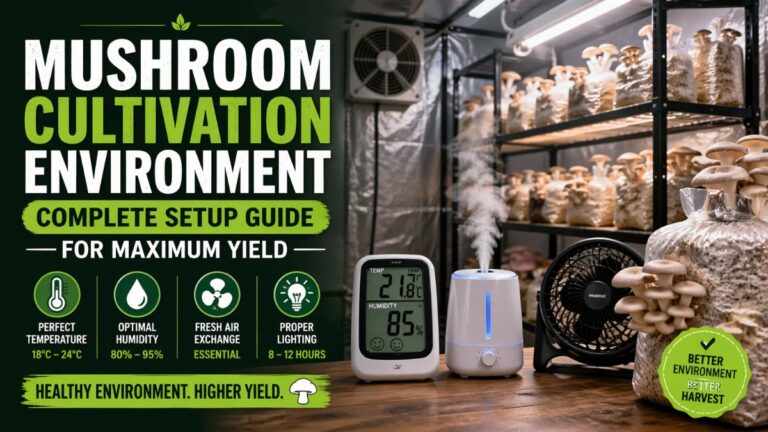
Fresh air is essential, but so is cleanliness. Keep humidity high without leaving standing water, wipe down surfaces regularly, and remove spent blocks promptly. If you use a humidifier, clean it often, because stale reservoirs can distribute contaminants through the room.
What to Do When You Find Contamination
Step 1: Isolate immediately
Don’t open the bag or jar to “check it out.” Opening a contaminated container releases a cloud of spores that can settle on every other container you own. Place it in a sealed bag and move it away from your grow area.
Step 2: Decide if it can be saved
Honesty beats optimism here. Most contaminated cultures can’t be rescued, especially when it’s green mold, bacterial slime or anything on grain. There are a few exceptions:
- Small cobweb patches on fruiting blocks: A light spray of 3% hydrogen peroxide may knock it back.
- Early Trichoderma on a fruiting block: Some growers cover the patch with salt or a damp paper towel to stop spore release, but this only buys time. It rarely saves the block.
- Contamination in a bulk tub: Sometimes you can remove a small contaminated section, but only if it’s caught very early.
When in doubt, throw it out. Saving a doubtful batch often costs you the rest of your grow.
Step 3: Dispose of it safely
- Seal the container before you carry it anywhere.
- Dispose of it outdoors, away from your grow room and any garden beds you use for mushroom substrate.
- Don’t compost heavily contaminated material near your cultivation area.
- Clean the area and tools thoroughly before you start again.
A note on eating mushrooms from contaminated batches
Don’t eat mushrooms that grew in a visibly contaminated block, jar or bag. Even if the fruiting bodies look fine, the contaminant could have affected them, and some molds are unsafe to ingest or inhale. When food safety is in question, discard it.
Track Patterns to Stop Repeat Losses
If contamination keeps showing up, the problem is probably a pattern, not bad luck. Maybe it’s always grain from the same sterilization batch, or bags from the same shelf, or jars you inoculated on humid days. Without notes, those clues disappear.
That’s where tracking helps. A simple log of dates, substrate batches, sterilization times, locations and results shows trends that are hard to see from memory. You can do this on paper, or use the Mushroom Contamination Tracker to record each batch and spot repeat problems faster. Within a few grows, you’ll see exactly where your process leaks.
FAQs
Can I save a contaminated mushroom grow bag?
Rarely. Most contaminated bags and jars can’t be saved, especially with green mold or bacterial slime. Light cobweb mold on a fruiting block is sometimes manageable, but it’s safest to isolate and discard anything doubtful.
How can I tell the difference between mycelium and mold?
Mycelium is usually white, fluffy or rope-like, and smells earthy. Mold often shows unusual colors, grows very fast, and may smell sour or musty. If it turns green, black or orange, treat it as contamination.
Is it safe to eat mushrooms that grew near mold?
If the mushrooms grew from a visibly contaminated block, discard them. If a clean block sits next to a contaminated one, inspect the mushrooms carefully, and don’t eat anything that shows mold, slime or an off smell.
Why does my mushroom substrate keep getting contaminated?
Repeat contamination usually points to incomplete sterilization, overly wet substrate, dirty tools, weak spawn or poor air control. Keeping a record of each batch makes the cause much easier to find.
Conclusion
Contamination happens to every grower, including the experienced ones. What separates a frustrating hobby from a steady harvest is the routine behind it. Sterilize carefully, keep your workspace clean, watch your cultures closely, and act early when something looks off.