You check your grow bag in the morning and the oyster cluster looks almost ready. By evening, the caps have flared wide, the edges are thinning, and you’re wondering if you just missed the best window. If that sounds familiar, you’re in good company. Timing is the part of mushroom growing that trips up beginners and experienced growers alike.
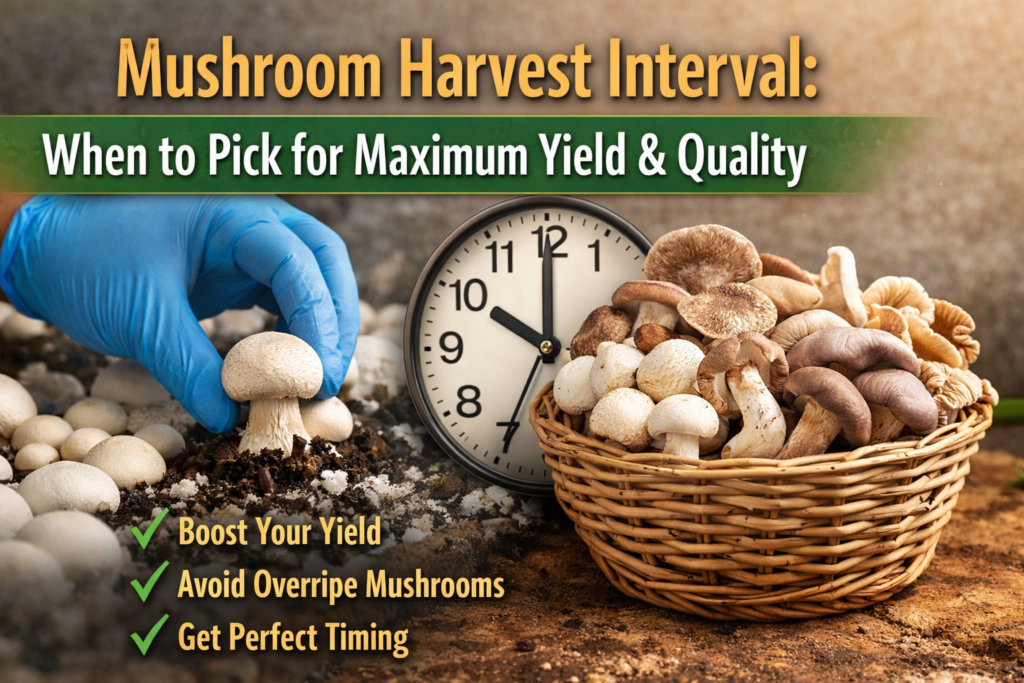
The mushroom harvest interval is what separates a decent harvest from a great one. It covers two things: how long you let each mushroom grow before picking, and how long you wait between flushes. Get both right and you’ll collect heavier, firmer, better-tasting mushrooms. Get them wrong and you can lose weight, flavor, and even an entire flush.
In this guide, you’ll learn how to read the signs, adapt your timing to different species, and build a simple routine you can repeat every week.
Understanding the Mushroom Harvest Interval
Mushrooms grow fast. Some species can double in size in a single day once the pins form. That speed is exactly why timing matters more here than with almost any other crop in your garden or grow room.
Two Timings You Need to Track
Most growers focus on one clock and forget the other. You actually need both:
- The picking window: the short stretch, often just a day or two, when an individual mushroom is at peak size, texture, and flavor.
- The rest interval: the gap between finishing one flush and the next round of pins appearing.
Think of it like baking bread. Pull it out early and it’s doughy. Leave it too long and it’s dry. Mushrooms are the same, just on a much tighter schedule.
Why Timing Changes Both Yield and Quality
Picking too early leaves weight behind. A mushroom harvested a day before its peak can be noticeably lighter, which adds up across a whole bag or log.
Picking too late causes a different set of problems:
- Caps flatten, dry out, and turn tougher or slightly bitter
- Spores drop, making a mess and, in a closed room, irritating your lungs (oyster spores are a known trigger for some people)
- Shelf life shrinks, so your mushrooms spoil faster in the fridge
- Overripe mushrooms keep drawing moisture and energy from the substrate, which can weaken the next flush
In short, a well-timed harvest protects both what’s in your basket and what’s still to come.
Signs Mushrooms Are Ready to Pick
A calendar gives you a rough guide, but the mushroom itself always has the final say. Temperature, humidity, fresh air, and strain all shift the schedule. So learn to read the signs mushrooms are ready to pick, and you’ll rarely get it wrong.
Here’s what to check each time:
- Cap edges: are they curled down, flat, or turning upward?
- Veil: is the thin membrane under the cap still intact?
- Texture: does the cap feel firm and springy or soft and papery?
- Spines or gills: are they clean and pale, or darkening and dusty?
When to Harvest Oyster Mushrooms
If you’re wondering when to harvest oyster mushrooms, watch the cap edges. The sweet spot is when the margins are still slightly curled downward or have just begun to flatten. Once the edges ruffle and turn upward, you’re cutting it close.
Under good conditions, oysters are usually ready about 4 to 7 days after pins appear. Check them morning and evening during that stretch.
Quick tip: if you spot fine white or grayish dust on nearby surfaces, spores are already dropping. Harvest that cluster right away.
Shiitake
Shiitake are ready when the partial veil has torn away but the cap edges still curl inward. The cap should look plump and rounded rather than wide open.
A slightly earlier pick gives you thicker, meatier mushrooms. A later pick gives you larger but thinner caps. Neither is wrong, so choose based on how you plan to cook them.
Button and Cremini
Pick these while the cap is closed and the veil is still intact. Once the veil stretches and snaps, the gills are exposed and the mushroom ages quickly. They’re still edible, but they won’t store as well.
Because button mushrooms ripen at different speeds, plan on picking every day during peak production.
Lion’s Mane
Lion’s mane is judged by its spines. Harvest when they’re about 1/4 to 1/2 inch (roughly 0.6 to 1.2 cm) long and bright white. If the spines get long, or the mushroom starts turning yellow or pinkish-brown, it’s past its best and can taste bitter.
How Often to Harvest Mushrooms: A Species Guide
New growers often ask how often to harvest mushrooms, and the honest answer is “it depends.” Still, these typical ranges will give you a starting point:
- Oyster: ready 4 to 7 days after pins form. The next flush often follows 7 to 14 days after you pick the first.
- King oyster: ready roughly 7 to 10 days from pinning, with a slower, steadier rhythm.
- Shiitake (sawdust blocks): ready around 5 to 7 days after pins appear. Allow about 1 to 2 weeks of rest before the next flush.
- Shiitake (logs): after a forced fruiting, rest the log for around two months before soaking it again.
- Button and cremini: pick daily as they ripen. Flushes arrive in waves, roughly every 7 to 10 days.
- Lion’s mane: usually ready one to two weeks after pinning. Check daily once the spines start to form.
Treat these numbers as ranges, not rules. Your own room, strain, and substrate will nudge them up or down.
Why Your Numbers May Differ
Four things shift your schedule more than anything else:
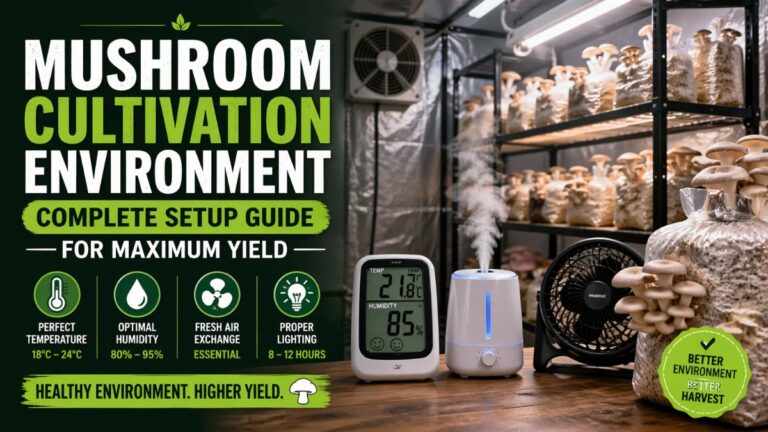
- Temperature: warmer rooms speed growth, cooler rooms slow it
- Humidity: low humidity dries pins and stalls development
- Fresh air: too much CO2 makes long stems and small caps
- Strain and substrate: different genetics and materials fruit at different speeds
If you’d rather not work out the dates by hand, the Mushroom Harvest Interval Calculator can help you estimate your next picking window based on your species and setup. Use it as a planning aid, then confirm with what you see on the block.
Mushroom Flush Timing: What Happens After the First Pick
The first harvest isn’t the end of the story. In fact, good mushroom flush timing is where many growers quietly gain or lose the most yield.
Rest and Reset Between Flushes
After you pick, the mycelium needs time to recover and gather resources for the next round. Help it along:
- Remove leftover stems and any aborted or shriveled pins
- Keep humidity steady so the surface doesn’t dry out
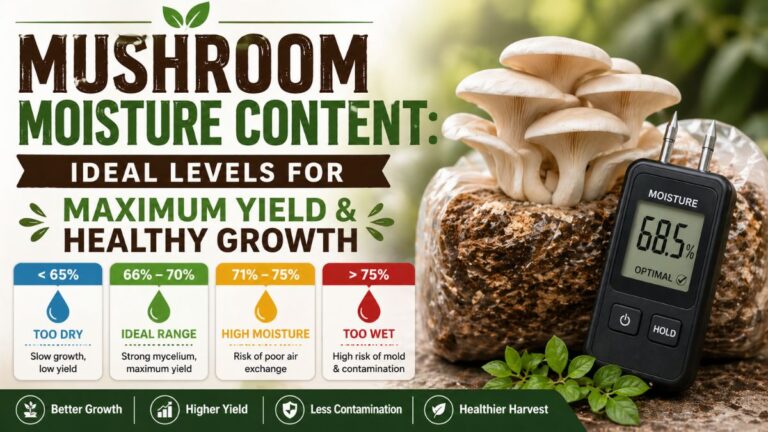
- Rehydrate if the substrate feels light (dense blocks are often soaked for several hours, while bags usually just need regular misting and fresh air)
- Keep the temperature in the strain’s preferred range
Resist the urge to hurry. Forcing a new flush before the mycelium is ready usually gives you fewer, smaller mushrooms.
Expect Smaller Flushes Over Time
The first flush is typically the biggest. Each one after that tends to shrink as nutrients and moisture get used up. That’s completely normal.
It’s usually time to stop when you notice:
- Yields dropping sharply flush after flush
- A sour smell or green, black, or orange patches (signs of contamination)
- A substrate that feels dry, light, and crumbly
When that happens, retire the block and compost it. Spent substrate is great for the garden.
Common Harvest Timing Mistakes (and Easy Fixes)
Even careful growers fall into these traps. Here’s how to avoid them:
- Waiting for bigger mushrooms. Bigger isn’t better. Past the peak, you gain a little size but lose flavor and shelf life. Pick on maturity, not on size.
- Checking only once a day. During the peak window, mushrooms can change fast. Look twice a day if you can.
- Pulling instead of cutting. Yanking can tear the substrate and invite contamination. Use a clean knife or give a gentle twist at the base.
- Picking right after misting. Wet mushrooms spoil sooner. Let the surface dry a bit before you harvest.
- Skipping the notes. If you don’t write dates down, you’ll forget what worked.
Build a Simple Harvest Routine
You don’t need fancy equipment. A repeatable routine does most of the work.
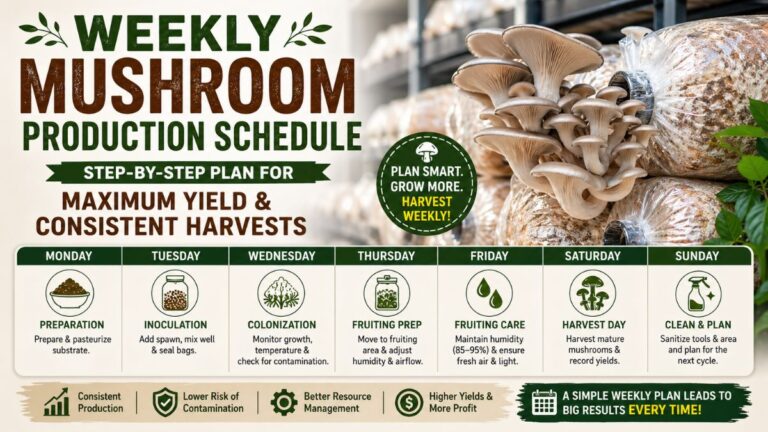
A Five-Step Weekly Rhythm
- Check at the same times each day. Morning and early evening works well.
- Look at the signs. Cap edges, veil, and spines tell you more than the date.
- Harvest clusters when most are ready. For clustering species like oysters, cutting the whole cluster is usually cleaner than picking one at a time.
- Record the details. Note the date, weight, and conditions.
- Rest, rehydrate, repeat. Give the mycelium its break before the next flush.
Handle Mushrooms Well After Picking
A perfect harvest can still be wasted by poor handling. Cool your mushrooms soon after picking and store them in a paper bag in the fridge. Skip washing until you’re ready to cook, since extra moisture speeds spoilage. Most fresh mushrooms keep well for about 5 to 7 days when stored this way.
Let Your Notes Do the Teaching
After two or three flushes, your log becomes your best guide. You’ll notice patterns, like which shelf grows faster or which day of the week you tend to miss the window. That’s how growers move from guessing to confidently predicting their harvest.
FAQs
How soon after pins appear should I harvest mushrooms?
It depends on the species. Oyster mushrooms are often ready in 4 to 7 days, king oysters in about 7 to 10 days, and lion’s mane in roughly one to two weeks. Always confirm with the visual signs, not just the calendar.
What happens if I harvest mushrooms too late?
Overripe mushrooms tend to be drier, tougher, and sometimes bitter. They also release spores and don’t store as long. Late picking can also drain the substrate and reduce the next flush.
How long should I wait between flushes?
Most indoor blocks and bags need about 1 to 2 weeks to rest and rebuild before the next flush. Logs need much longer, often around two months. Keep humidity steady and rehydrate if the substrate feels light.
Can I harvest only part of a cluster?
Yes, but it’s usually better to cut the whole cluster once most of the mushrooms have reached maturity. Leaving small ones behind rarely helps, and they can dry out or rot.
Conclusion
A great harvest isn’t luck. It comes from watching the mushrooms, respecting the rest period, and writing down what you see. Master your mushroom harvest interval and you’ll enjoy bigger yields, better texture, and more consistent flushes from the same grow kit.