Ever wondered why some mushroom growers get perfect flushes while others struggle with weak, thin, or oddly shaped mushrooms? The secret often lies in something many beginners overlook—light. Understanding Mushroom Light Requirements can dramatically improve your yield, quality, and consistency. While mushrooms don’t rely on light the same way plants do, the right lighting conditions act as a powerful signal that triggers healthy growth and proper development.
If you’re serious about growing mushrooms successfully—whether at home or commercially—this guide will help you master lighting the right way.
Understanding Mushroom Light Requirements
Do Mushrooms Really Need Light?
Unlike plants, mushrooms do not perform photosynthesis. However, light still plays a crucial role in their growth cycle.
- Light acts as a trigger for pinning (initial mushroom formation)
- It helps guide the direction of growth
- It improves shape, color, and uniformity
Without proper lighting, mushrooms may grow:
- Deformed or elongated
- Pale or discolored
- In random directions
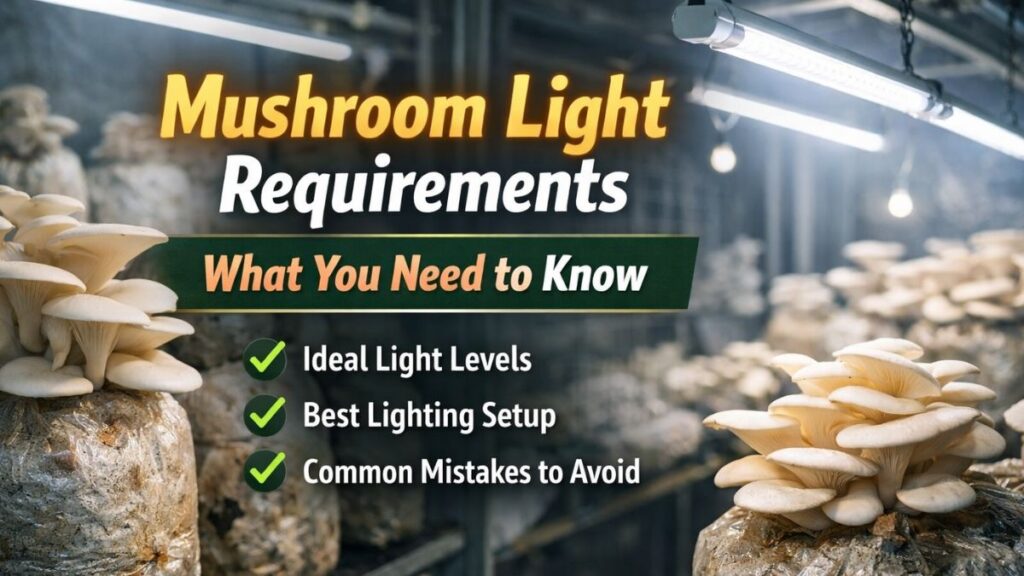
Ideal Light Intensity and Duration
For most species like oyster or button mushrooms, light needs are minimal but important.
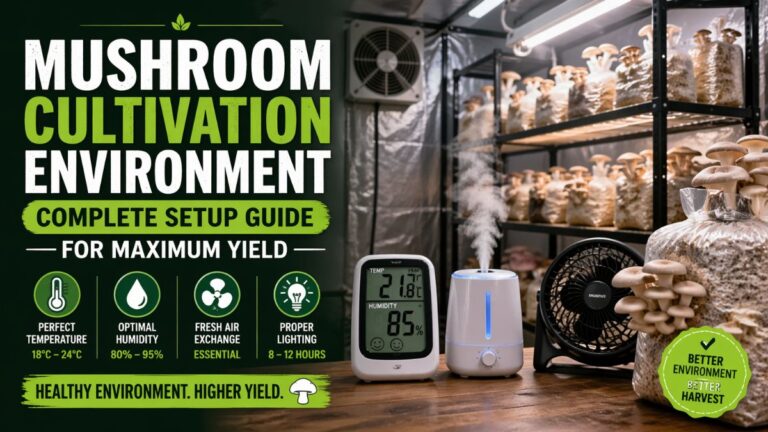
- Intensity: 500–1000 lux (similar to a dimly lit room)
- Duration: 8–12 hours per day
- Type: Indirect or diffused light
This is why many growers search for ideal lighting conditions for mushroom cultivation—because balance is key. Too much light can dry out the substrate, while too little affects growth quality.
Choosing the Right Lighting Setup
Best Light Sources for Mushroom Growth
Not all lights are created equal when it comes to mushroom farming. Here’s what works best:
- LED lights
- Energy-efficient
- Low heat output
- Long-lasting
- Fluorescent lights
- Affordable
- Provide consistent brightness
Avoid:
- Direct sunlight (can overheat and dry out mushrooms)
- High-intensity grow lights designed for plants
If you’re wondering about the best light for growing mushrooms indoors, LED strips or bulbs with cool white tones (6500K) are often the top choice.
Step-by-Step Lighting Setup Guide
Follow this simple process to create the perfect lighting environment:
- Choose your light source (LED recommended)
- Position lights above the growing area (not too close)
- Ensure even distribution of light across all grow bags or trays
- Set a timer for 8–12 hours daily
- Monitor temperature to avoid overheating
For precise calculations tailored to your setup, try this helpful tool:
👉 https://mushroomcalculators.com/tool/mushroom-light-requirement-calculator/
This tool simplifies how much light do mushrooms need based on your growing conditions.
Tips, Benefits, and Common Mistakes
Key Benefits of Proper Lighting
When you meet the correct Mushroom Light Requirements, you’ll notice:
- Better-shaped mushrooms
- Improved color and texture
- Higher yield consistency
- Faster and healthier growth cycles
Lighting may seem minor, but it directly impacts your final harvest quality.
Expert Tips for Best Results
- Use diffused lighting instead of direct exposure
- Maintain a consistent schedule using timers
- Combine proper lighting with humidity and fresh air exchange
- Observe your mushrooms—growth patterns reveal lighting issues
These small adjustments can significantly improve results, especially when learning mushroom growing light tips for beginners.
Common Mistakes to Avoid
Many growers unknowingly sabotage their harvest with lighting errors:
- ❌ Too much light causing dryness
- ❌ No light during fruiting stage
- ❌ Uneven lighting leading to inconsistent growth
- ❌ Using high-heat bulbs
Safety Precautions
- Keep electrical setups away from moisture
- Use waterproof fixtures if possible
- Avoid overheating enclosed growing spaces
Safety is essential, especially in humid environments like mushroom grow rooms.
FAQs
1. Can mushrooms grow in complete darkness?
Yes, but they may not develop properly. Light improves shape, color, and direction of growth.
2. What color light is best for mushrooms?
Cool white light (around 6500K) works best for most mushroom species.
3. How much light do mushrooms need daily?
Typically 8–12 hours of low-intensity light is ideal during the fruiting stage.
Conclusion
Mastering Mushroom Light Requirements is one of the simplest yet most powerful ways to improve your mushroom harvest. With the right balance of light intensity, duration, and setup, you can transform average yields into consistent, high-quality results.