You followed the kit instructions, kept the bags warm, and misted like a devoted plant parent. Then your first harvest arrived: a modest cluster of oyster mushrooms. Was that good? Honestly, nobody could tell you.
That’s the gap this Mushroom Biological Efficiency Guide fills. Biological efficiency (BE) is a single percentage that shows how well your substrate turned into mushrooms. Once you know your number, you can judge any grow fairly and improve the next one. In the next few minutes, you’ll learn what BE means, how to calculate it, what counts as a good result, and which small changes make the biggest difference.
What Biological Efficiency Actually Means
The Simple Definition
Biological efficiency compares two weights: the fresh mushrooms you harvest and the dry substrate you started with. The answer is a percentage.
Think of it as a report card for your grow. A BE of 100% means 1 kg of dry substrate produced 1 kg of fresh mushrooms.
That sounds impossible, since mushrooms are roughly 90% water. But fungi are remarkably good at pulling moisture and nutrients into their fruiting bodies, and well-run oyster grows often reach or beat that mark.
Why It Beats “How Many Grams Did I Get?”
Raw harvest weight tells you very little. A bigger bag will always give a bigger harvest, so the number alone can’t show whether your method worked. BE levels the playing field.
Here’s what it helps you do:
- Compare different bag sizes, recipes, and species fairly
- Spot a weak grow early instead of guessing what went wrong
- Test one change at a time and see if it truly helped
- Set realistic goals for your next batch
- Talk results with other growers in a language they understand
How to Calculate Mushroom Biological Efficiency
Learning how to calculate mushroom biological efficiency takes about two minutes, and you only need a kitchen scale.
The Formula
BE (%) = (Fresh mushroom weight ÷ Dry substrate weight) × 100
That’s it. No advanced math, no special equipment.
Know Your Mushroom Substrate Dry Weight
This is where most beginners trip up. Straw and sawdust are mixed with water, so a “3 kg block” is mostly moisture. Your mushroom substrate dry weight is only the solid material, including any supplements such as wheat bran.
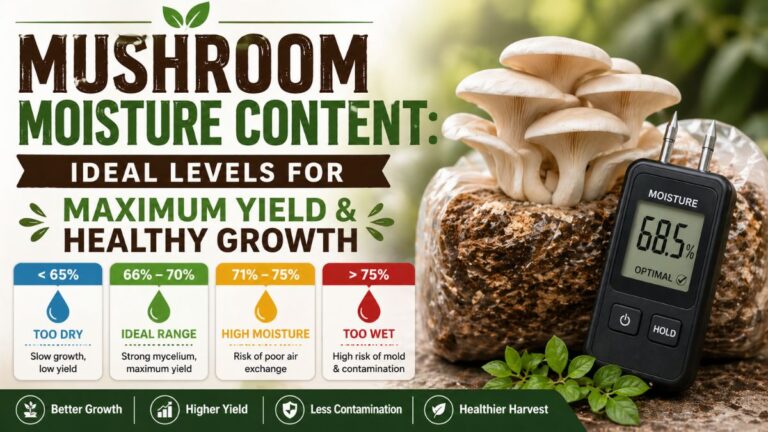
If your substrate is about 65% water, the dry portion is roughly 35% of the total weight. Not sure of your moisture level? Dry a small sample at low heat until the weight stops dropping, or ask your supplier for the figure.
A Worked Example
Say you have a 3 kg block at 65% moisture.
- Dry weight: 3,000 g × 0.35 = 1,050 g
- Harvests: first flush 450 g, second flush 260 g, third flush 130 g
- Total fresh weight: 840 g
- BE: 840 ÷ 1,050 × 100 = 80%
For a beginner, that’s a result to be proud of.
Mistakes That Skew Your Numbers
- Using the wet substrate weight, which makes your BE look tiny
- Weighing mushrooms after drying them instead of fresh
- Counting one flush while comparing against someone else’s three-flush total
- Forgetting to include supplements in the dry weight
- Mixing trimmed and untrimmed harvest weights
Let a Tool Do the Math
If you’d rather skip the arithmetic, the Mushroom Biological Efficiency Calculator turns your weights into a percentage in seconds. It’s handy when you’re running several batches at once.
What Is a Good Result? A Mushroom Biological Efficiency Guide to Benchmarks
Typical Ranges by Species
Numbers shift with strain, substrate, and growing conditions, but these ballpark figures give you something to aim for:
- Oyster mushrooms: 75–150% for experienced growers
- Shiitake (supplemented sawdust): 50–100%
- Lion’s mane: 40–90%
- King oyster: 40–80%
Button mushrooms are usually measured differently, by yield per square metre of compost, so BE isn’t the standard tool there.
Biological Efficiency of Oyster Mushrooms for Beginners
Oysters are the friendliest species to start with, which is why most home growers begin there. The biological efficiency of oyster mushrooms varies widely, so don’t be discouraged by the high end of that range.
If you land between 50% and 100% in your first few grows, you’re doing well. Growers who push past 100% usually have clean spawn, balanced moisture, and plenty of fresh air.
Compare Like With Like
Don’t measure your lion’s mane against someone’s oyster grow on pasteurised straw. Species, substrate, and flush count all change the picture.
The fairest comparison is you versus your previous batch. That’s where real progress shows up.
How to Increase Mushroom Yield at Home
Here’s the practical part. If you’re wondering how to increase mushroom yield at home, these habits matter far more than expensive gear.
Start With Strong, Clean Spawn
Healthy spawn colonises fast and outcompetes mould. Buy from a reputable supplier, use it while it’s fresh, and avoid anything that smells sour or shows green patches.
A slightly higher spawn rate, often 10–20% by weight for straw, speeds colonisation and lowers contamination risk.
Match the Substrate to the Species
- Oysters thrive on pasteurised straw or hardwood sawdust
- Shiitake and lion’s mane prefer supplemented hardwood sawdust
- Wheat bran can lift yield, but too much invites contamination
A nutritious substrate gives the fungus more to work with, which usually means a higher BE. Just keep sterilisation or pasteurisation consistent.
Get Moisture Right
Too dry, and mushrooms stall. Too wet, and bacteria move in. Try the squeeze test: grab a handful of prepared substrate and squeeze hard. You want a drop or two of water, not a stream.
Give Them Fresh Air
Here’s something that surprises many beginners: long, leggy stems and tiny caps usually point to a carbon dioxide problem, not a nutrient problem.
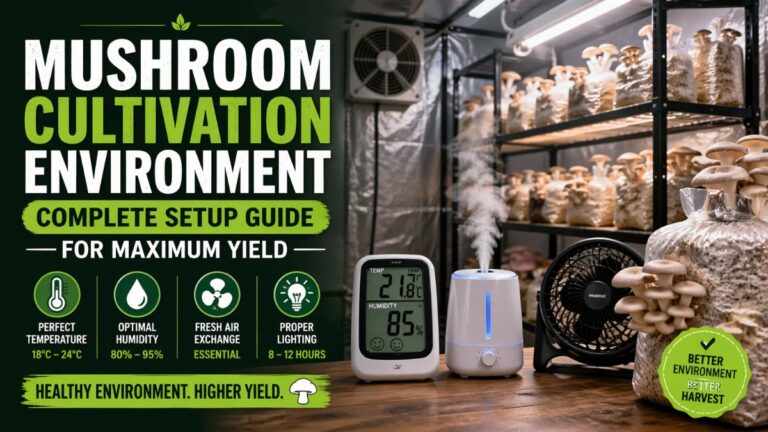
Mushrooms need fresh air exchange to form healthy caps. Open your fruiting chamber a few times a day, add more holes to the bag, or use a small fan on a timer.
Keep Humidity and Temperature Steady
Aim for roughly 85–95% humidity during fruiting. Many oysters fruit comfortably between 15°C and 24°C, though strains differ, so check your supplier’s notes.
Mist the chamber walls rather than soaking the mushrooms themselves. Constant dripping can cause blotchy, bacteria-prone caps.
Harvest at the Right Moment
Pick oysters when the cap edges are still curled slightly downward or just flattening. Wait too long and they drop spores, lose weight, and spoil faster.
Twist and pull the whole cluster cleanly, and weigh it straight away for accurate records.
Don’t Quit After the First Flush
The first flush is usually the biggest, but later flushes can add a surprising amount to your total BE. After harvesting, let the block rest for a few days, keep conditions steady, and wait for new pins. Sawdust blocks often respond well to a 12–24 hour soak between flushes.
Many beginners toss a block after one harvest and leave easy yield on the table.
Track, Compare, and Improve
Keep a Simple Grow Log
A notebook or phone note is enough. Record:
- Date, species, and strain
- Substrate recipe and dry weight
- Spawn rate
- Temperature and humidity notes
- Weight of each flush
- Final BE percentage
Change One Thing at a Time
If you tweak the spawn rate, moisture, and airflow in the same batch, you’ll never know which change helped. Adjust one variable per grow and let the numbers do the talking.
Turn Results Into Habits
After three or four batches, patterns appear. Maybe your blocks always dip in winter, or your second flush is consistently weak. Those clues are gold, and your log makes them visible.
FAQs
What does biological efficiency mean in mushroom growing?
Biological efficiency is the weight of fresh mushrooms harvested divided by the dry weight of the substrate, multiplied by 100. It shows how effectively your substrate was converted into mushrooms.
Can biological efficiency go above 100%?
Yes. Mushrooms are mostly water, so strong oyster grows can exceed 100% because the fresh weight includes moisture absorbed during fruiting.
Should I use wet or dry substrate weight?
Always use the dry weight, including supplements. Using wet weight makes your result look much lower than it really is.
How soon will I see better yields?
Most beginners notice improvement within two or three grows, especially after fixing airflow and moisture. Consistent record-keeping speeds this up.
Conclusion
Biological efficiency turns guesswork into something you can measure, compare, and improve. You now know the formula, the common pitfalls, realistic benchmarks, and the habits that lift yield at home, from clean spawn to fresh air to patient second flushes.
The best next step is simple: weigh your substrate, weigh every flush, and calculate your first BE. Use the Mushroom Biological Efficiency Calculator to check your math, then change just one thing in your next batch. Keep this Mushroom Biological Efficiency Guide handy, and your next harvest could be your best one yet.