
Ever wondered why some mushroom growers harvest dense, healthy flushes while others struggle with slow growth or contamination? The secret often lies in one overlooked factor—Mushroom Moisture Content.
Too little moisture dries out your substrate, starving the mycelium. Too much creates a breeding ground for mold and bacteria. Finding the perfect balance can dramatically improve yield, quality, and consistency. Whether you’re a beginner or scaling up, mastering moisture levels is one of the smartest moves you can make.
Understanding Mushroom Moisture Content and Its Importance
Why Moisture Levels Matter in Mushroom Cultivation
Mushrooms are over 80–90% water, making moisture a critical growth factor. Proper Mushroom Moisture Content ensures:
- Strong mycelium colonization
- Faster pinning and fruiting
- Higher yield and better texture
- Reduced contamination risks
Without the right moisture balance, even high-quality spawn won’t perform well.
Ideal Moisture Range for Maximum Yield
For most substrates, the optimal moisture range is:
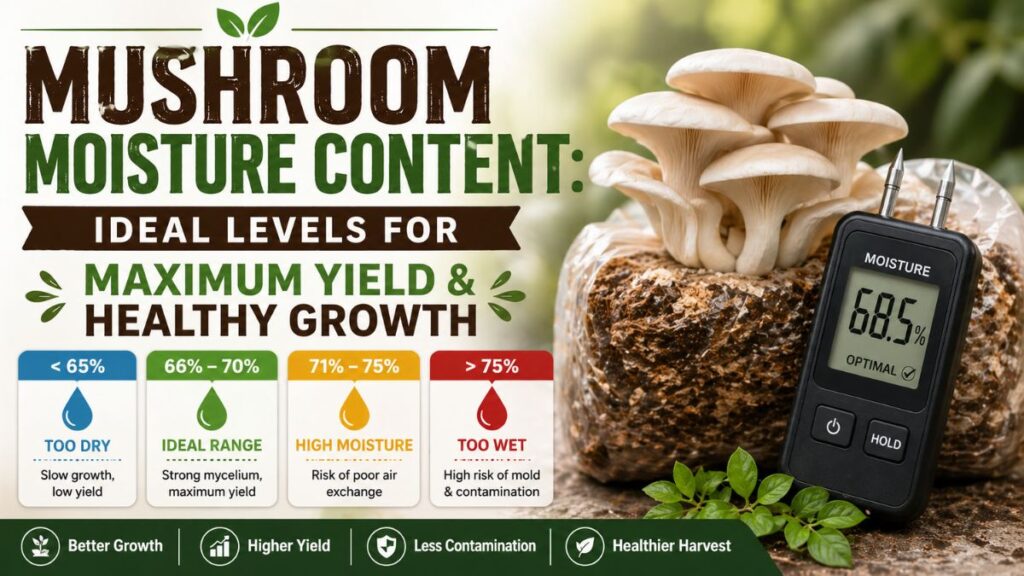
- 60–65%: Too dry (slow growth, low yield)
- 66–70%: Ideal (healthy mycelium and maximum yield)
- 71–75%: Slightly high (risk of poor airflow)
- Above 75%: Too wet (high contamination risk)
Maintaining this range is essential for ideal moisture levels for mushroom growth.
Signs of Incorrect Moisture Levels
Watch for these indicators:
- Too Dry: Cracked substrate, weak mycelium
- Too Wet: Slimy texture, foul smell, mold growth
Recognizing these early helps prevent major losses.
How to Achieve Ideal Moisture Content (Step-by-Step)
Step-by-Step Moisture Adjustment Process
Follow this simple process for how to maintain moisture in mushroom substrate:
- Measure Water Accurately
Use a scale or measuring container to avoid guesswork. - Mix Substrate Evenly
Ensure water is distributed uniformly throughout. - Perform the Squeeze Test
- Take a handful of substrate
- Squeeze firmly
- Ideal result: A few drops of water (not dripping)
- Adjust as Needed
- Add water if too dry
- Add dry material if too wet
- Let It Rest
Allow the substrate to absorb moisture evenly before use.
For precise calculations, use this helpful tool: Mushroom Moisture Content Calculator
Tools That Make Moisture Control Easier
- Moisture meters
- Digital weighing scales
- Spray bottles for fine adjustments
These tools improve consistency, especially in larger setups.
Best Practices for Consistent Results
- Always pre-measure water before mixing
- Use clean, contamination-free materials
- Maintain proper airflow alongside moisture
Consistency is key to achieving best moisture content for mushroom yield.
Expert Tips, Benefits, and Common Mistakes to Avoid
Key Benefits of Maintaining Ideal Moisture
When moisture is balanced, you’ll notice:
- Faster colonization
- Bigger and healthier mushrooms
- Higher biological efficiency
- Lower contamination rates
This directly supports mushroom substrate moisture percentage optimization.
Common Mistakes Beginners Make
Avoid these pitfalls:
- Overwatering “just to be safe”
- Skipping the squeeze test
- Ignoring environmental humidity
- Using inconsistent substrate mixes
Even small mistakes can impact your entire crop.
Safety Tips and Precautions
- Always use clean water to prevent contamination
- Wear gloves when handling substrate
- Avoid stagnant water buildup
- Store substrate in a clean, ventilated area
Good hygiene protects both your crop and your investment.
FAQs
1. What is the ideal Mushroom Moisture Content for beginners?
The ideal range is 66–70%, as it provides the best balance for growth and yield.
2. Can I fix overly wet substrate?
Yes. Mix in dry materials like straw or sawdust and recheck using the squeeze test.
3. How often should I check moisture levels?
Check during preparation and monitor visually during growth to ensure consistency.
Conclusion:
Mastering Mushroom Moisture Content isn’t just a technical detail—it’s the foundation of successful mushroom cultivation. With the right balance, you unlock faster growth, higher yields, and healthier crops.