If your mushrooms are growing slowly, getting contaminated, or producing disappointing harvests, the problem might not be your spores—it’s your substrate. Understanding Mushroom Substrate Pasteurization Methods can be the game-changer that transforms weak yields into thriving flushes. Whether you’re a beginner or an experienced grower, mastering this step is essential for healthy mycelium and consistent results.
Let’s break down the most effective techniques, step-by-step methods, and expert tips to help you get better yields every time.
Why Pasteurization Matters in Mushroom Cultivation
What Is Substrate Pasteurization?
Pasteurization is the process of heating your substrate to eliminate harmful microbes while preserving beneficial ones. Unlike sterilization, it doesn’t kill everything—just enough to give mushroom mycelium a competitive advantage.
Benefits of Proper Pasteurization
Using the right best pasteurization method for mushroom substrate offers several advantages:
- Reduces contamination risks
- Promotes faster mycelium colonization
- Improves overall yield and quality
- Creates a balanced microbial environment
When Pasteurization Is Necessary
Pasteurization is ideal for bulk substrates like:
- Straw
- Coco coir
- Manure-based mixes
If you’re working with nutrient-rich materials, learning how to pasteurize mushroom substrate at home becomes crucial for success.
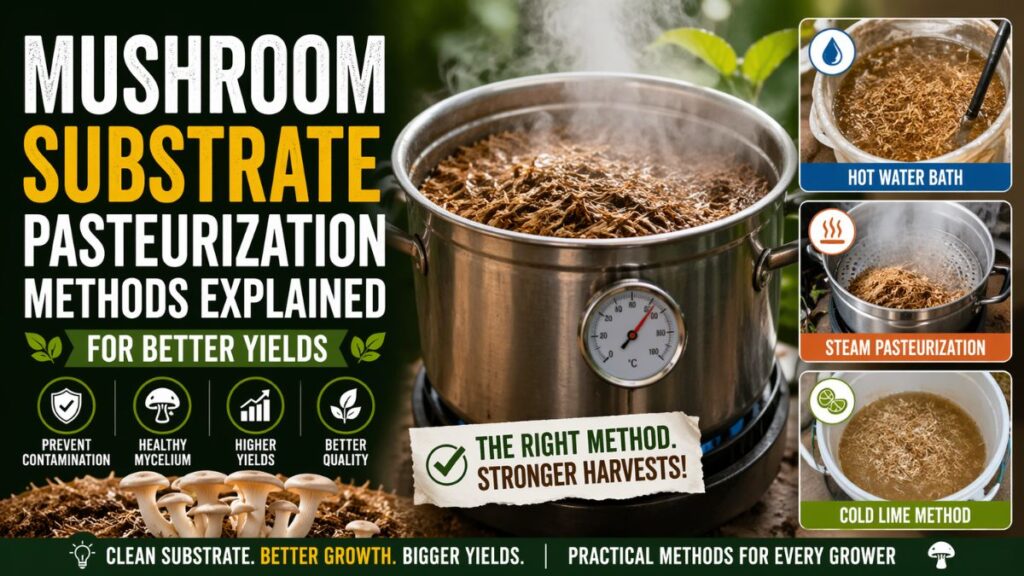
Top Mushroom Substrate Pasteurization Methods
Hot Water Bath Method (Beginner-Friendly)
This is one of the simplest and most popular mushroom substrate pasteurization techniques.
Steps:
- Heat water to 65–80°C
- Submerge substrate in a heat-resistant bag or container
- Maintain temperature for 1–2 hours
- Drain and cool before use
Best for: Straw, coco coir
Pro tip: Use a thermometer to avoid overheating
Steam Pasteurization (More Controlled)
Steam offers better temperature consistency and is widely used by serious growers.
Steps:
- Place substrate in a container above boiling water
- Cover tightly to trap steam
- Maintain 65–75°C for 1–2 hours
Best for: Larger batches
Advantage: Even heat distribution
Cold Lime Pasteurization (Low-Effort Method)
This method uses hydrated lime to raise pH and kill contaminants—no heat required.
Steps:
- Mix water with hydrated lime (high pH solution)
- Soak substrate for 12–24 hours
- Drain thoroughly before use
Best for: Straw
Caution: Measure lime carefully to avoid damaging mycelium
Step-by-Step Guide + Expert Tips for Better Results
Step-by-Step Process (Hot Water Method Example)
- Chop substrate into smaller pieces
- Heat water to the correct temperature
- Soak substrate for 60–90 minutes
- Remove and drain excess water
- Let it cool completely before inoculation
Expert Tips for Maximum Yield
To master improving mushroom yield with pasteurized substrate, follow these tips:
- Maintain consistent temperature (too high kills beneficial microbes)
- Ensure proper moisture—substrate should feel like a wrung-out sponge
- Always use clean tools and containers
- Pasteurize fresh batches instead of storing for long
Common Mistakes to Avoid
Even small errors can ruin your batch:
- ❌ Overheating above 80°C (turns pasteurization into sterilization)
- ❌ Using contaminated water
- ❌ Skipping proper draining (leads to soggy substrate)
- ❌ Inoculating before cooling
Safety Precautions
- Wear gloves when handling hot materials
- Be cautious with boiling water and steam
- Handle hydrated lime with care (it’s alkaline and can irritate skin)
FAQs:
1. What is the best pasteurization method for beginners?
The hot water bath method is the easiest and safest for beginners due to its simplicity and minimal equipment needs.
2. Can I skip pasteurization?
Skipping pasteurization significantly increases contamination risk, especially for bulk substrates.
3. How long does pasteurized substrate last?
It’s best to use it within 24–48 hours to prevent contamination.
Final Thoughts:
Mastering Mushroom Substrate Pasteurization Methods isn’t just a technical step—it’s the foundation of successful mushroom cultivation. With the right technique, you can dramatically reduce contamination, speed up growth, and enjoy bigger, healthier harvests.
Ready to simplify your process? Try this handy tool to get precise measurements and perfect your substrate preparation: Mushroom Substrate Pasteurization Calculator