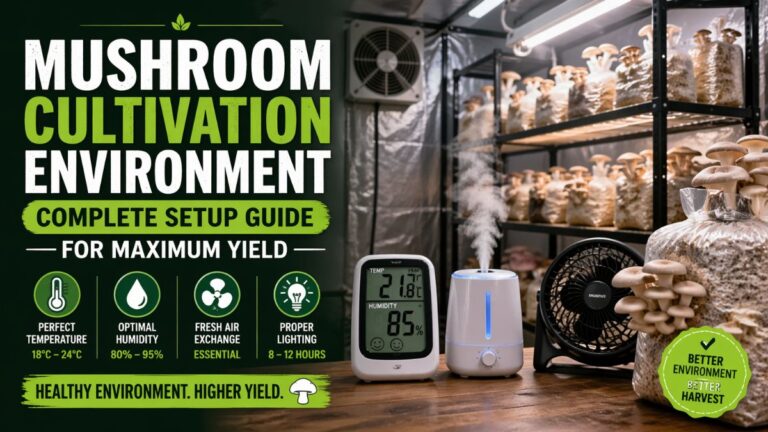

If your mushrooms look weak, grow slowly, or produce disappointing yields, the problem might not be your substrate—it’s your air. Fresh Air Exchange (FAE) is one of the most overlooked factors in cultivation, yet it directly controls growth speed, shape, and overall health. This Mushroom FAE Guide will show you how to unlock stronger, faster, and more consistent flushes by mastering airflow the right way.
What Is Mushroom FAE and Why It Matters
Understanding Fresh Air Exchange (FAE)
FAE refers to replacing stale air (high in CO₂) with fresh oxygen-rich air inside your grow space. Mushrooms breathe differently than plants—they release CO₂ and require oxygen to develop properly.
Without proper FAE:
- Mushrooms grow thin, tall, and weak
- Caps stay small or fail to open
- Growth slows significantly
Why Proper FAE Improves Mushroom Growth
A well-balanced airflow system leads to:
- Faster colonization and fruiting
- Thicker stems and larger caps
- Reduced contamination risks
This is why many growers search for a how to improve mushroom fresh air exchange strategy early in their journey—it’s a game-changer.
Step-by-Step Mushroom FAE Setup Guide
Step 1: Assess Your Grow Environment
Before adjusting airflow, understand your setup:
- Is it a monotub, grow tent, or room?
- Is air stagnant or moving?
- Are humidity levels stable?
Each environment needs a slightly different approach.
Step 2: Create Passive or Active Airflow
There are two main methods:
Passive FAE (Beginner-friendly):
- Drill holes in monotubs
- Use polyfill or micropore tape
- Allow natural air exchange
Active FAE (Advanced setups):
- Install fans or air pumps
- Use timers for controlled airflow
- Combine with humidity systems
If you’re unsure how much airflow you need, use this helpful tool:
👉 https://mushroomcalculators.com/tool/mushroom-fae-calculator/
This tool simplifies best FAE setup for mushroom grow room decisions based on your conditions.
Step 3: Balance FAE with Humidity
Too much airflow can dry out your substrate. Always:
- Mist when needed
- Maintain 85–95% humidity
- Avoid direct fan exposure on mushrooms
Step 4: Monitor and Adjust Daily
Watch your mushrooms closely:
- Long stems = too much CO₂
- Dry caps = too much airflow
- Slow growth = poor air exchange
Fine-tuning is key to success.
Expert Tips, Mistakes & Safety Practices
Pro Tips for Better Results
- Increase FAE during fruiting stage for bigger flushes
- Use indirect airflow instead of strong direct fans
- Combine FAE with proper lighting cycles
- Maintain clean air to reduce contamination
These practices help optimize mushroom fruiting chamber airflow tips effectively.
Common FAE Mistakes to Avoid
Many growers struggle because of simple errors:
- ❌ Over-fanning (causes drying)
- ❌ Ignoring CO₂ buildup
- ❌ Poor hole placement in monotubs
- ❌ No airflow monitoring
Avoiding these will improve your ideal FAE for mushroom monotub setup dramatically.
Safety Precautions
While adjusting airflow:
- Ensure electrical equipment is moisture-safe
- Avoid mold exposure by wearing a mask if contamination appears
- Keep your grow area clean and sanitized
Healthy airflow should never compromise safety.
FAQs
1. How often should I provide fresh air exchange?
Ideally, FAE should occur multiple times per hour in active systems, or continuously in passive setups.
2. Can too much FAE harm mushrooms?
Yes. Excess airflow dries the substrate and slows growth. Balance is crucial.
3. What are signs of poor FAE?
Look for long stems, fuzzy feet, small caps, and slow development.
Conclusion:
Mastering airflow is one of the fastest ways to improve your harvests. This Mushroom FAE Guide gives you the foundation to create the perfect environment—one where mushrooms thrive, grow faster, and produce healthier flushes.