Have you ever imagined turning a simple log into a thriving source of fresh, organic mushrooms? That’s the magic of Mushroom Log Inoculation—a natural, low-cost method that lets you grow gourmet mushrooms right in your backyard. Whether you’re aiming for self-sufficiency, a side income, or simply a rewarding hobby, this beginner-friendly technique opens the door to sustainable cultivation with minimal effort.
If done correctly, one inoculated log can produce mushrooms for years. Let’s break down everything you need to get started.
Essential Tools and Materials for Mushroom Log Inoculation
Must-Have Tools
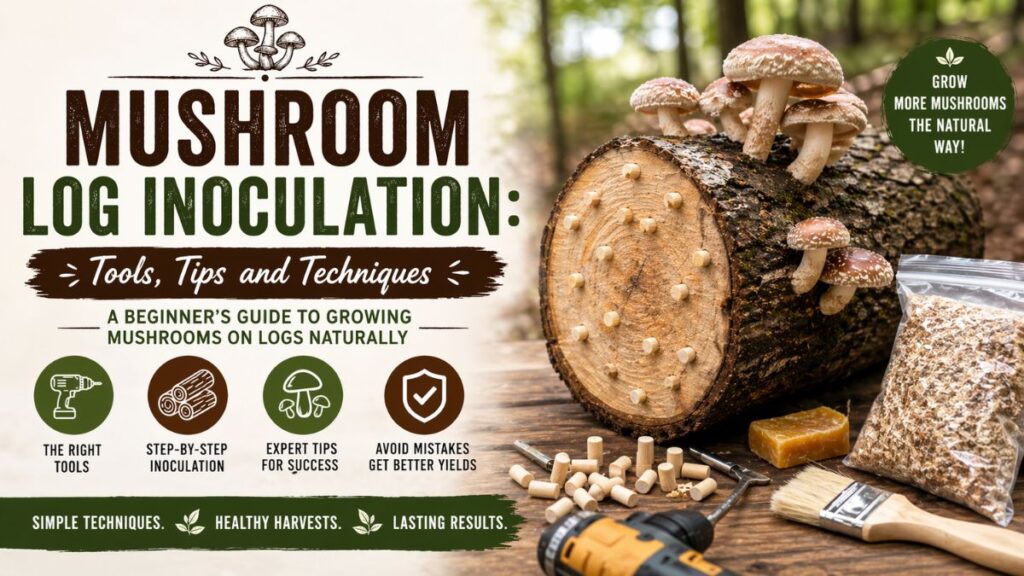
To ensure success, gather these basic tools before starting:
- Drill with appropriate drill bit (usually 8–12 mm)
- Hammer or inoculation tool
- Wax (cheese wax or beeswax)
- Brush or wax dauber
- Protective gloves
Key Materials You’ll Need
Choosing the right materials is crucial for effective how to inoculate mushroom logs at home:
- Fresh hardwood logs (oak, maple, or beech preferred)
- Mushroom spawn (plug spawn or sawdust spawn)
- Clean water source
Choosing the Right Logs
- Cut logs during dormant season (late winter to early spring)
- Ideal length: 3–4 feet
- Diameter: 4–8 inches
- Avoid diseased or decaying wood
Using high-quality materials significantly increases your chances of successful colonization and long-term yields.
Step-by-Step Mushroom Log Inoculation Process
Step 1 – Drill Holes in the Log
Drill holes about 1–1.5 inches deep in a diamond pattern:
- Space holes 4–6 inches apart
- Ensure even distribution across the log
Step 2 – Insert the Spawn
This is the heart of mushroom log inoculation step by step guide:
- Tap plug spawn into holes using a hammer
- For sawdust spawn, use an inoculation tool for precision
Step 3 – Seal with Wax
Sealing prevents contamination and moisture loss:
- Melt wax and apply over each hole
- Cover log ends if needed for extra protection
Step 4 – Incubation and Care
Place logs in a shaded, humid area:
- Keep off the ground (use bricks or pallets)
- Water occasionally during dry periods
- Allow 6–12 months for full colonization
Step 5 – Fruiting and Harvesting
Once colonized:
- Soak logs in water for 24 hours to trigger fruiting
- Mushrooms typically appear within 1–2 weeks
- Harvest when caps are fully formed but not overgrown
This process makes best logs for mushroom cultivation beginners easy to implement even in small spaces.
Expert Tips, Benefits, and Common Mistakes to Avoid
Key Benefits of Mushroom Log Inoculation
- Long-term yield (3–5 years per log)
- Low maintenance after setup
- Eco-friendly and chemical-free
- Produces high-quality gourmet mushrooms
Pro Tips for Better Results
- Use fresh logs (within 2–6 weeks of cutting)
- Label logs with date and mushroom type
- Maintain proper moisture levels
- Stack logs in a “log cabin” or lean-to style for airflow
Common Mistakes to Avoid
Many beginners struggle due to avoidable errors:
- Using old or dry logs
- Skipping wax sealing
- Placing logs in direct sunlight
- Overwatering or neglecting moisture
Safety Precautions
- Wear gloves while handling tools and wax
- Work in a clean environment to reduce contamination
- Ensure proper identification before consuming mushrooms
These practical tips for successful mushroom log inoculation can dramatically improve your results.
FAQs:
1. How long does mushroom log inoculation take to produce mushrooms?
Typically, logs take 6–12 months to fully colonize before producing mushrooms.
2. Which mushrooms are best for log inoculation?
Shiitake, oyster, and lion’s mane are beginner-friendly and highly productive.
3. How often can I harvest from one log?
You can harvest multiple times per year for up to 3–5 years, depending on care.
Final Thoughts:
Mushroom Log Inoculation is more than just a growing method—it’s a sustainable lifestyle choice that connects you with nature while providing fresh, nutritious food. With the right tools, proper technique, and a bit of patience, anyone can master this rewarding process.
Ready to get started? Plan your setup efficiently using this helpful tool: Mushroom Log Inoculation Calculator.