Growing mushrooms successfully isn’t just about spores and substrate—it’s about space. Imagine investing time, money, and effort into your farm, only to see poor yields because your room is too small, overcrowded, or poorly designed. That’s where Mushroom Farm Room Size Planning becomes a game-changer. When done right, it boosts productivity, prevents contamination, and maximizes profits. Let’s break it down step by step so you can build a grow room that actually works.
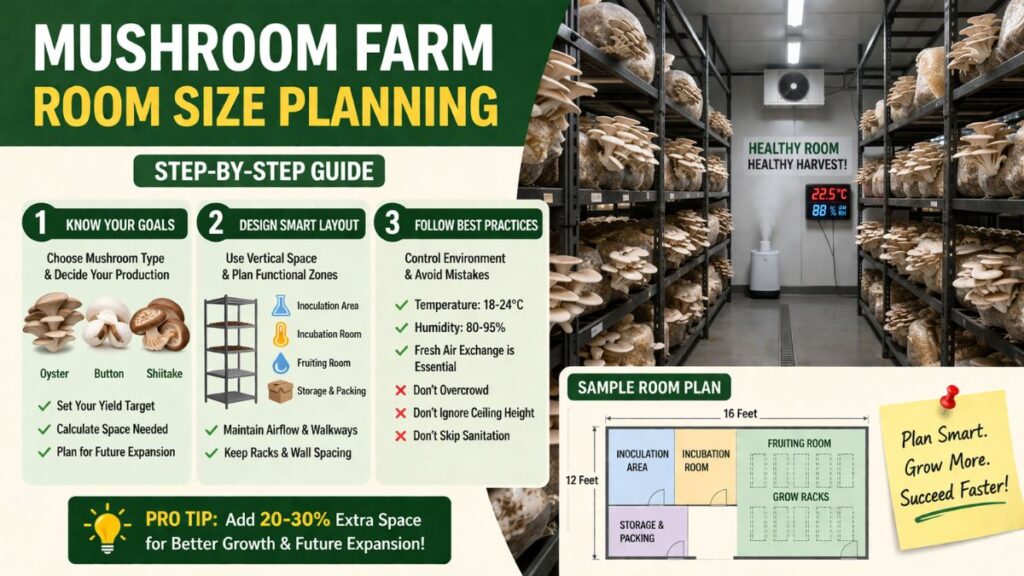
Step 1: Understand Your Production Goals
Before measuring walls or buying racks, you need clarity on what you want to achieve.
Determine Your Mushroom Type and Scale
Different mushrooms require different space setups:
- Oyster mushrooms need vertical space for hanging bags
- Button mushrooms require trays and horizontal layouts
- Shiitake needs controlled humidity zones
Ask yourself:
- Are you growing for personal use or commercial sale?
- How many kilograms per cycle do you expect?
This directly impacts your ideal mushroom grow room dimensions.
Calculate Yield Per Square Foot
A simple rule:
- 1 square meter ≈ 10–12 kg (varies by species and method)
Use this to estimate:
- Total room size required
- Number of racks or shelves
👉 For accurate planning, use this tool:
https://mushroomcalculators.com/tool/mushroom-grow-room-size-calculator/
Plan for Expansion
Beginners often underestimate growth. Always:
- Add 20–30% extra space
- Leave room for new racks or equipment
This ensures your setup scales without rebuilding everything.
Step 2: Design the Layout for Efficiency
Once you know the size, the next step is smart layout design. This is where many growers fail.
Optimize Vertical Space
Instead of expanding horizontally:
- Use multi-tier shelving (3–5 levels)
- Maintain 30–45 cm spacing between shelves
Benefits:
- Higher yield per square foot
- Better airflow management
Allocate Functional Zones
A proper mushroom cultivation room setup guide includes:
- Inoculation area (clean zone)
- Incubation room (dark, warm)
- Fruiting room (humid, ventilated)
- Storage/packing space
Separating these reduces contamination risk and improves workflow.
Ensure Proper Airflow and Access
Never overcrowd your room. Maintain:
- 60–90 cm walking paths
- Space between walls and racks
Good airflow helps prevent:
- Mold growth
- CO₂ buildup
- Poor fruiting
Step 3: Apply Best Practices & Avoid Costly Mistakes
Now comes the expert-level part—fine-tuning your Mushroom Farm Room Size Planning for long-term success.
Follow Environmental Guidelines
Room size must support:
- Temperature control systems
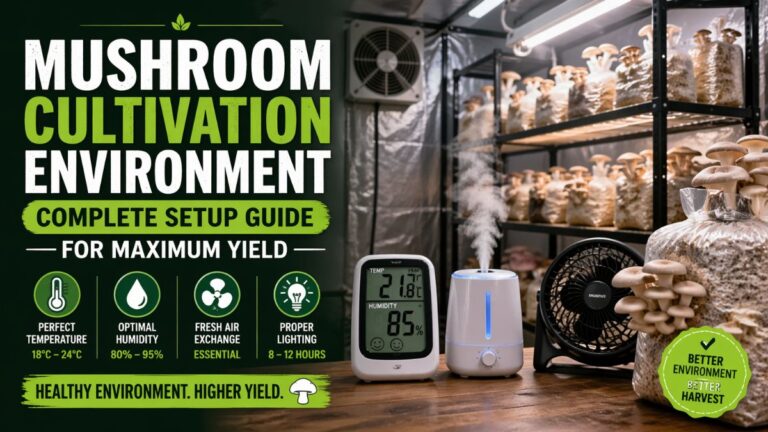
- Humidity (80–95% for most mushrooms)
- Fresh Air Exchange (FAE)
If your room is too large:
- It becomes expensive to maintain conditions
If too small:
- Overcrowding leads to contamination
Balance is key.
Common Mistakes to Avoid
Avoid these beginner errors:
- ❌ Ignoring ceiling height
- ❌ No space for equipment (humidifiers, fans)
- ❌ Poor drainage system
- ❌ Overpacking grow bags
These mistakes can reduce yield dramatically.
Safety and Hygiene Tips
Mushroom farming involves biological processes, so safety matters:
- Always sanitize tools and surfaces
- Install proper drainage to avoid water buildup
- Use non-toxic, washable wall materials
- Ensure electrical safety in humid environments
These steps protect both your crop and your investment.
FAQs:
1. What is the minimum room size for mushroom farming?
A small-scale setup can start in 10×10 feet, but proper layout and ventilation are more important than size alone.
2. How much space do I need for commercial mushroom farming?
It depends on output goals, but most commercial farms start from 500–1000 sq. ft. with expansion plans.
3. Can I grow mushrooms in a small room?
Yes, with vertical shelving and proper airflow, even small spaces can be highly productive.
Conclusion
Smart Mushroom Farm Room Size Planning isn’t about guessing—it’s about strategy. When you align your room size with your production goals, design an efficient layout, and follow proven best practices, you set yourself up for consistent, high-quality yields.
Don’t rush the process. Plan carefully, use tools, and think long-term. The difference between struggling growers and successful ones often comes down to how well they designed their grow space from the start.
Take the first step today—measure your space, define your goals, and start building a mushroom farm that truly performs.