Have you ever wondered why your mushroom harvest slows down after the first flush—even when everything seems perfect? The truth is, most growers unknowingly make critical errors during rehydration. Understanding Mushroom Flush Rehydration Mistakes to Avoid can be the difference between weak yields and a thriving, multi-flush success. Rehydration isn’t just about adding water—it’s about restoring life to your substrate in the right way.
Let’s break down the most common pitfalls and how you can avoid them for faster, healthier mushroom growth.
Why Proper Rehydration Matters for Mushroom Growth
What Happens After a Flush?
After a harvest, your substrate loses a significant amount of moisture. Without proper rehydration, the mycelium becomes stressed, leading to:
- Smaller subsequent flushes
- Slower growth cycles
- Increased contamination risk
Benefits of Correct Rehydration
When done right, rehydration helps you:
- Boost yield across multiple flushes
- Maintain strong, healthy mycelium
- Improve consistency in mushroom size and quality
This is why mastering how to rehydrate mushroom substrate after flush is essential for every grower.
Step-by-Step Guide to Proper Mushroom Flush Rehydration
Step 1: Assess Moisture Loss
Before adding water, check the substrate:
- Is it dry and light?
- Has it shrunk from container edges?
These signs indicate it’s time to rehydrate.
Step 2: Choose the Right Method
There are two common techniques:
- Dunking method (best for cakes and small blocks)
- Heavy misting (ideal for bulk substrates)
Avoid mixing methods randomly—consistency is key.
Step 3: Rehydrate Properly
Follow this simple process:
- Use clean, room-temperature water
- Submerge substrate (if dunking) for 12–24 hours
- Drain excess water completely
- Return to fruiting conditions immediately
Step 4: Maintain Hygiene
Contamination often occurs during rehydration. Always:
- Use sterilized containers
- Avoid touching substrate unnecessarily
- Keep your environment clean
This aligns with best practices for best way to rehydrate mushroom cake safely.
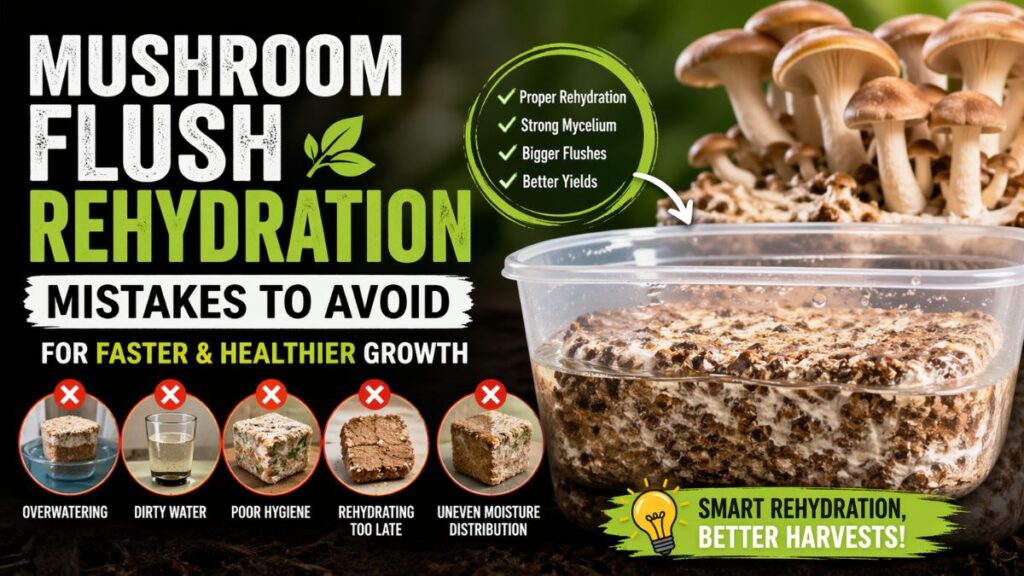
Common Mushroom Flush Rehydration Mistakes to Avoid
Overwatering the Substrate
Too much water can suffocate mycelium and lead to rot.
Avoid this by:
- Draining excess water fully
- Not extending dunking beyond 24 hours
Using Contaminated Water
Dirty or unfiltered water introduces harmful bacteria.
Solution:
- Use clean or filtered water
- Prefer boiled and cooled water for safety
This is crucial for preventing common mushroom growing mistakes during rehydration.
Ignoring Rest Time
Mycelium needs time to recover after soaking.
Tip:
- Allow a short resting period before exposing to fruiting conditions
Rehydrating Too Late
Waiting too long reduces the substrate’s ability to recover.
Watch for signs:
- Cracking substrate
- Severe shrinkage
Uneven Moisture Distribution
Dry pockets can slow down regrowth.
Fix it by:
- Ensuring even soaking or misting
- Rotating blocks if needed
Pro Tips for Faster & Healthier Growth
Maintain Ideal Conditions
After rehydration, ensure:
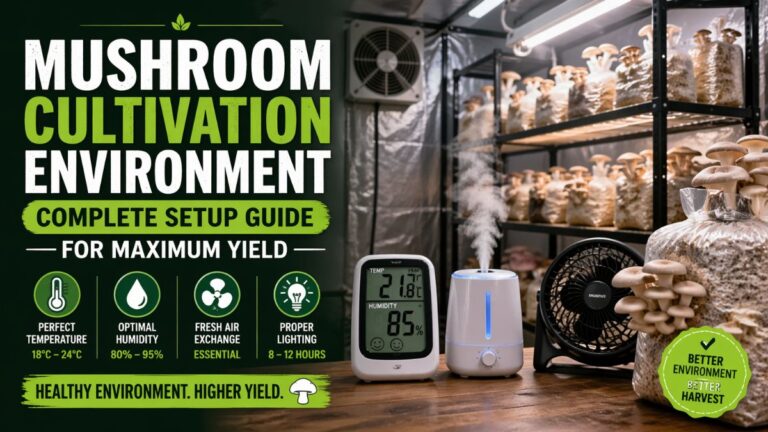
- Proper humidity (85–95%)
- Adequate fresh air exchange
- Stable temperature
Monitor Closely
Check your substrate daily for:
- Moisture levels
- Signs of contamination
- New pin formation
Use Smart Tools
To simplify the process and avoid guesswork, try this helpful tool:
👉 https://mushroomcalculators.com/tool/mushroom-flush-rehydration-calculator/
It helps you determine the exact water requirements for optimal rehydration.
FAQs:
1. How long should I soak my mushroom substrate?
Typically 12–24 hours, depending on size and dryness. Avoid over-soaking to prevent damage.
2. Can I reuse water for multiple substrates?
No, always use fresh water to avoid contamination risks.
3. How many flushes can I expect after rehydration?
With proper care, you can get 2–4 additional flushes, depending on substrate quality.
Conclusion:
Mastering Mushroom Flush Rehydration Mistakes to Avoid is a game-changer for any grower. Small errors—like overwatering or poor hygiene—can quietly ruin your harvest, while simple corrections can dramatically boost yield and health.