Have you ever bought fresh mushrooms only to find them slimy and unusable just days later? You’re not alone—and the problem isn’t your fridge, it’s often the packaging. Choosing the right Mushroom Packaging Ideas can dramatically extend shelf life, preserve flavor, and reduce waste. Whether you’re a home cook or a small grower, understanding how to store mushrooms properly can save money and improve quality.
Let’s explore practical, expert-backed ways to package mushrooms so they stay fresh longer—without complicated tools or expensive materials.
Why Proper Mushroom Packaging Matters
Moisture Control Is Everything
Mushrooms are highly sensitive to moisture. Too much humidity leads to sliminess, while too little causes drying.
Best practices:
- Use breathable materials like paper bags
- Avoid airtight plastic containers unless ventilated
- Store in a cool, dry place (ideally 2–4°C)
Extended Shelf Life and Quality
Using smart packaging techniques helps:
- Maintain texture and firmness
- Prevent bacterial growth
- Keep mushrooms fresh for up to 7–10 days
This is especially useful for those searching for how to store mushrooms without plastic.
Best Mushroom Packaging Ideas for Home and Commercial Use
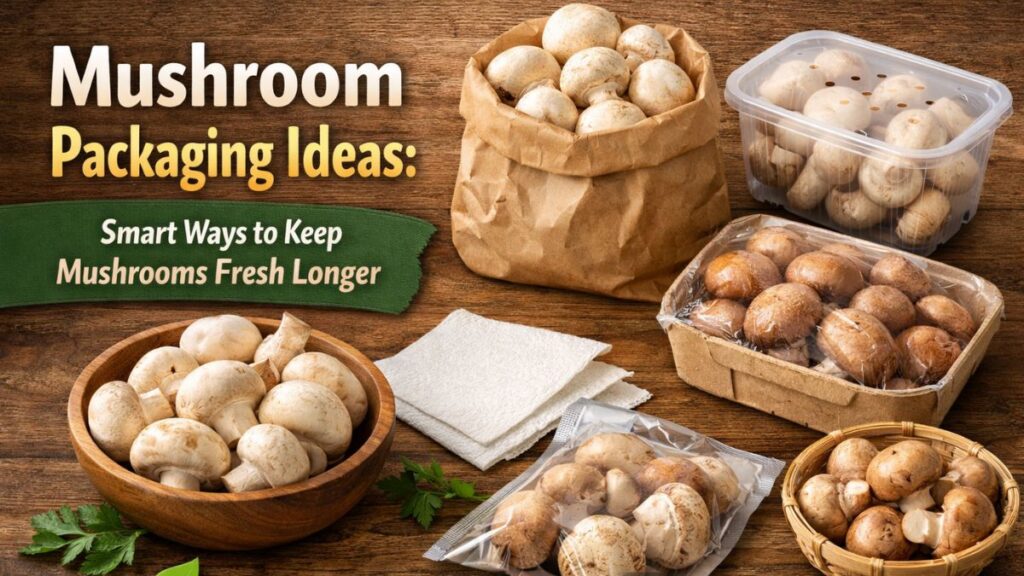
Paper-Based Packaging (Top Choice)
Paper bags are one of the simplest yet most effective solutions.
Why it works:
- Absorbs excess moisture
- Allows air circulation
- Prevents condensation buildup
Ideal for short-term storage in refrigerators.
Ventilated Plastic Containers
If you prefer plastic, choose containers with holes.
Key features:
- Built-in airflow
- Reduced moisture accumulation
- Better durability for transport
This method suits those exploring best packaging for fresh mushrooms at home.
Eco-Friendly Packaging Options
Sustainability is becoming essential.
Popular eco-options:
- Kraft paper boxes
- Bamboo baskets
- Compostable packaging films
These are excellent for businesses focusing on eco-friendly mushroom packaging solutions.
Vacuum Packaging (Use with Caution)
Vacuum sealing is not always ideal for fresh mushrooms.
Pros:
- Extends shelf life in some cases
Cons:
- Can trap moisture
- May alter texture
Best used for dried mushrooms rather than fresh ones.
Step-by-Step Guide to Packaging Mushrooms Correctly
Step 1: Clean Gently (Avoid Washing)
- Use a dry cloth or soft brush
- Remove dirt without adding moisture
Step 2: Choose the Right Packaging Material
- Paper bag → Best for freshness
- Ventilated box → Best for transport
Step 3: Add a Moisture Barrier
- Place a paper towel inside the package
- Helps absorb excess humidity
Step 4: Store in the Right Place
- Keep in the fridge’s main compartment
- Avoid crisper drawers (too humid)
This simple process is perfect for anyone looking for tips to extend mushroom shelf life naturally.
Common Mistakes to Avoid
- ❌ Storing mushrooms in sealed plastic bags
- ❌ Washing before storage
- ❌ Keeping them in overly humid areas
Safety Tips You Shouldn’t Ignore
- Always check for slimy texture or foul smell before use
- Discard mushrooms showing dark spots or mold
- Keep away from raw meat to avoid contamination
Expert Tips for Maximum Freshness
Combine Packaging with Smart Storage
- Keep mushrooms away from strong-smelling foods
- Use breathable wraps instead of cling film
Rotate Stock Regularly
- Use older mushrooms first
- Label packaging with storage dates
Use Tools for Precision
If you’re managing larger quantities, try using a packaging calculator to estimate ideal storage methods and quantities:
👉 https://mushroomcalculators.com/tool/mushroom-packaging-calculator/
FAQs:
How long do mushrooms last in the fridge?
Fresh mushrooms typically last 5–10 days when stored properly in breathable packaging.
Can I store mushrooms in plastic containers?
Yes, but only if they are ventilated to prevent moisture buildup.
Is it safe to freeze fresh mushrooms?
Yes, but it’s best to cook them first to preserve texture and flavor.
Conclusion:
Fresh mushrooms deserve better than being wasted due to poor storage. By applying these practical Mushroom Packaging Ideas, you can extend shelf life, maintain quality, and reduce food waste effortlessly. Small changes—like switching to paper packaging or adding a moisture barrier—can make a big difference.