Getting your mushrooms to grow fast, healthy, and contamination-free isn’t just about humidity and temperature—there’s a hidden factor many beginners overlook: pH balance. In this Mushroom pH Level Guide, you’ll discover why even a small pH mistake can ruin your entire batch—and how to fix it step by step.
Whether you’re growing at home or scaling up, mastering pH is the difference between weak yields and thriving flushes. The good news? You don’t need to be a scientist. With a simple process and a few smart tips, you can control pH like a pro.
What is Mushroom pH Level & Why It Matters
Understanding pH in Mushroom Cultivation
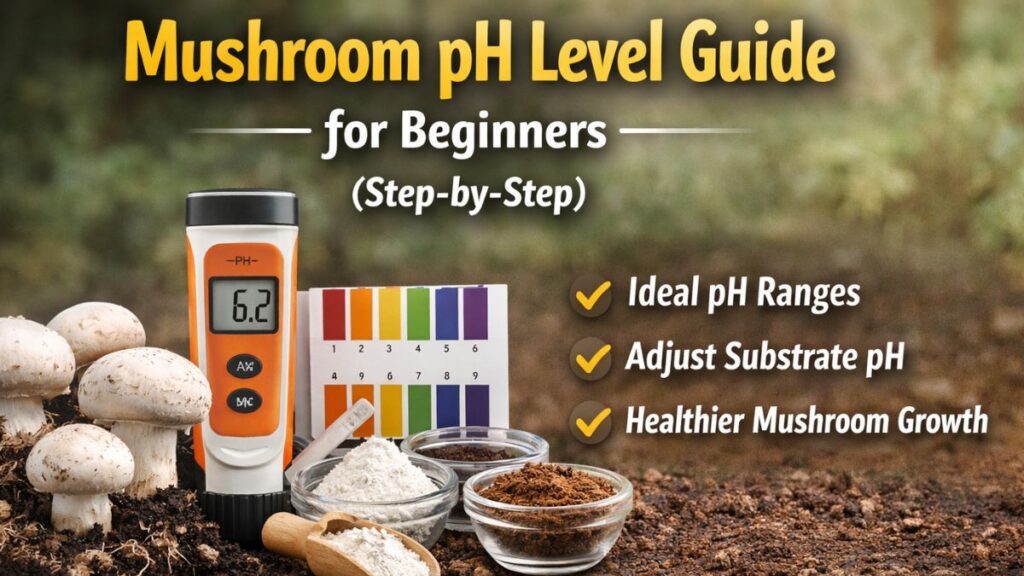
pH measures how acidic or alkaline your substrate is, on a scale of 0 to 14. Most mushrooms prefer a slightly acidic to neutral range.
- Ideal pH range: 5.5 to 7.0
- Too acidic: slows mycelium growth
- Too alkaline: increases contamination risk
This is why following a proper Mushroom pH Level Guide is essential, especially for beginners.
Benefits of Maintaining the Right pH
Keeping your substrate in the correct pH range offers:
- Faster mycelium colonization
- Higher yields and healthier flushes
- Reduced contamination from molds and bacteria
- Stronger, more resilient growth
Common pH Mistakes Beginners Make
Avoid these frequent errors:
- Not testing pH at all
- Overcorrecting with too many additives
- Ignoring water pH
- Using unbalanced substrates
Step-by-Step Mushroom pH Level Adjustment Guide
Step 1: Test Your Substrate pH
Start by measuring your substrate using:
- Digital pH meter (most accurate)
- pH test strips (budget-friendly)
Mix your substrate with distilled water (1:5 ratio) before testing for better accuracy.
Step 2: Adjust pH Levels Properly
If your pH is off, adjust it carefully:
To increase pH (make more alkaline):
- Add hydrated lime (calcium hydroxide)
- Use small amounts and mix thoroughly
To decrease pH (make more acidic):
- Add gypsum or sulfur
- Use natural acidic materials like coffee grounds (in moderation)
Pro tip: Make gradual changes—never adjust drastically.
Step 3: Re-Test and Stabilize
After adjustments:
- Let the substrate rest for a few hours
- Test again to confirm stability
- Repeat small corrections if needed
For precise and quick calculations, you can use this helpful internal tool:
👉 https://mushroomcalculators.com/tool/mushroom-ph-level-calculator/
Step 4: Monitor During Growth
pH can shift during colonization and fruiting.
- Check pH periodically
- Watch for signs like slow growth or unusual smells
- Maintain clean growing conditions
Expert Tips, Best Practices & Safety Precautions
Pro Tips for Beginners
- Always use clean, sterilized tools
- Stick to simple substrates when starting
- Maintain consistent water quality
- Record your pH adjustments for future batches
These small habits make a big difference in long-term success.
Safety Precautions
Handling pH-adjusting materials requires care:
- Wear gloves when using lime or chemicals
- Avoid inhaling powders
- Store materials safely away from children
Things to Avoid
- Overusing lime (can kill mycelium)
- Ignoring contamination signs
- Using untreated tap water with unknown pH
- Skipping testing altogether
FAQs:
1. What is the best pH level for mushroom growth?
Most mushrooms grow best between pH 5.5 and 7.0, depending on the species.
2. Can I grow mushrooms without checking pH?
Yes, but it’s risky. Not monitoring pH increases chances of contamination and poor yields.
3. How often should I check pH?
Check during substrate preparation and occasionally during colonization for best results.
Conclusion
Mastering pH might seem like a small detail, but it has a massive impact on your success. By following this Mushroom pH Level Guide, you can avoid beginner mistakes, improve growth speed, and produce healthier flushes every time.