
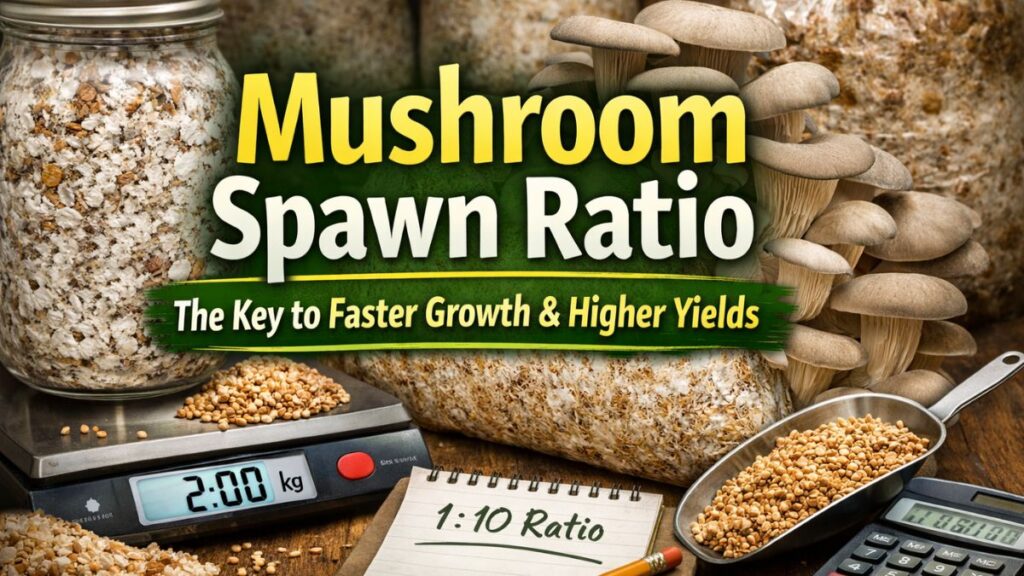
Have you ever wondered why some mushroom growers harvest dense, healthy flushes while others struggle with slow growth or contamination? The secret often lies in one overlooked factor: the Mushroom Spawn Ratio. This simple yet powerful concept can dramatically influence how quickly your substrate colonizes—and how abundant your final yield becomes. Whether you’re a beginner or an experienced cultivator, mastering spawn ratio is one of the smartest ways to boost productivity without increasing costs.
Understanding Mushroom Spawn Ratio and Why It Matters
What Is Mushroom Spawn Ratio?
The Mushroom Spawn Ratio refers to the proportion of spawn (seed material containing mycelium) to the bulk substrate (like straw, sawdust, or compost). It is typically expressed as a percentage.
For example:
- 1 kg spawn mixed with 10 kg substrate = 1:10 ratio (10%)
Why Spawn Ratio Impacts Growth Speed
A higher spawn ratio means more active mycelium is introduced into the substrate. This leads to:
- Faster colonization
- Reduced contamination risk
- More uniform growth
On the other hand, a lower spawn ratio may slow down colonization and increase vulnerability to competing organisms.
Ideal Spawn Ratios for Common Mushrooms
While it varies by species, general recommendations include:
- Oyster mushrooms: 5–10%
- Button mushrooms: 7–12%
- Shiitake mushrooms: 10–15%
Finding the right balance is key—too little slows growth, too much wastes resources.
How to Calculate and Apply the Right Spawn Ratio
Step-by-Step Guide to Calculate Spawn Ratio
Follow these simple steps for accurate results:
- Measure your substrate weight
Example: 20 kg of pasteurized straw - Choose your desired spawn ratio
Example: 10% - Calculate spawn needed
Formula:
Spawn = Substrate × Ratio
→ 20 kg × 10% = 2 kg spawn - Mix thoroughly
Ensure even distribution for consistent colonization
👉 For quick and accurate calculations, try this handy tool:
Mushroom Spawn Ratio Calculator: https://mushroomcalculators.com/tool/mushroom-spawn-ratio-calculator/
Best Practices for Application
- Always use fresh, high-quality spawn
- Mix spawn evenly to avoid patchy growth
- Maintain proper moisture levels in the substrate
- Incubate in a clean, temperature-controlled environment
Tools and Materials You’ll Need
- Weighing scale
- Clean mixing surface or container
- Gloves (for hygiene)
- Pasteurized substrate
Benefits, Mistakes to Avoid, and Expert Tips
Key Benefits of Optimizing Spawn Ratio
Using the correct spawn ratio offers multiple advantages:
- Faster colonization time
- Higher yields per batch
- Lower contamination risk
- Better resource efficiency
Common Mistakes to Avoid
Many growers unknowingly make these errors:
- Using too little spawn
Leads to slow growth and contamination - Overloading spawn unnecessarily
Increases costs without proportional benefits - Poor mixing techniques
Causes uneven colonization - Ignoring environmental conditions
Even perfect ratios fail without proper temperature and humidity
Expert Tips for Better Results
- Start with a 10% spawn ratio for most beginner setups
- Adjust based on climate and substrate type
- In colder conditions, slightly increase spawn ratio
- Always prioritize cleanliness and hygiene
Safety Precautions
- Wear gloves and maintain sterile conditions
- Avoid contaminated spawn—it can ruin entire batches
- Properly pasteurize or sterilize substrates before use
FAQ:
1. What is the best mushroom spawn ratio for beginners?
A 10% spawn ratio is ideal for beginners. It offers a good balance between speed and cost.
2. Can I use a higher spawn ratio for faster growth?
Yes, but beyond a certain point (around 15%), the benefits decrease while costs increase.
3. Does spawn ratio affect yield?
Absolutely. An optimized spawn ratio ensures faster colonization, which often results in higher yields and healthier mushrooms.
Conclusion:
The Mushroom Spawn Ratio isn’t just a technical detail—it’s a game-changer. By understanding and applying the right ratio, you can dramatically improve your growth speed, reduce risks, and maximize your harvests. The best part? It’s simple to calculate and easy to implement.