Ever wondered why some mushroom growers consistently harvest plump, market-ready caps while others end up with overgrown, low-quality yields? The secret often lies in mastering the Mushroom Harvest Interval—the precise timing between growth stages and picking. Harvest too early, and you lose potential yield. Wait too long, and quality drops fast. Understanding this delicate balance can dramatically improve both your output and profitability.
In this guide, you’ll learn exactly when and how to harvest mushrooms for maximum yield and quality—whether you’re a beginner or looking to refine your growing process.
Understanding Mushroom Harvest Timing Basics
What Is Mushroom Harvest Interval?
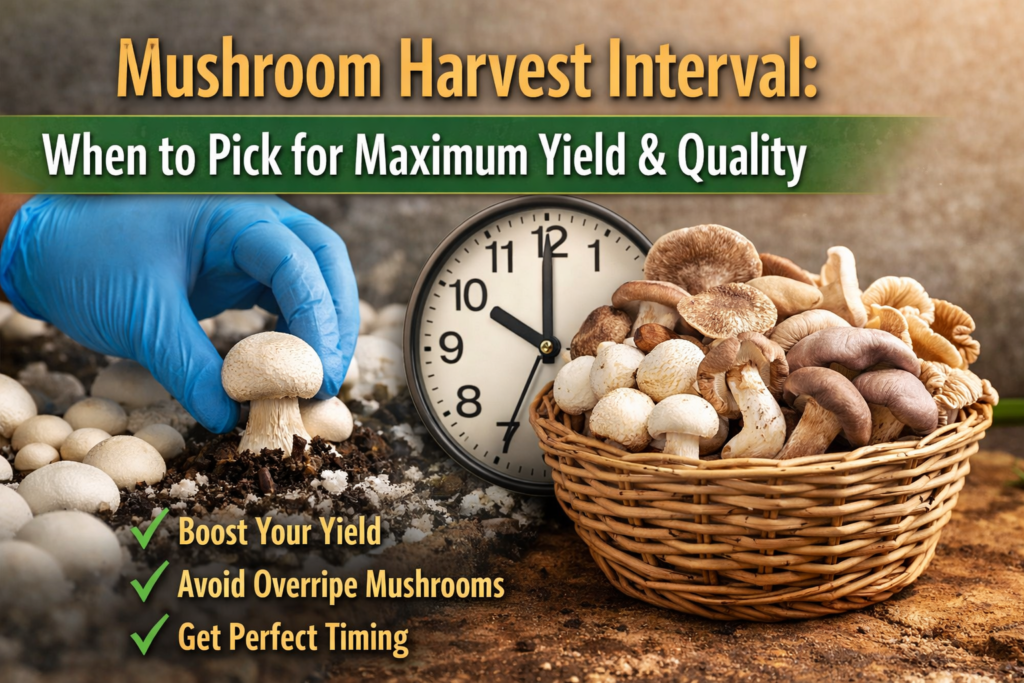
The Mushroom Harvest Interval refers to the optimal time window between the mushroom reaching maturity and being harvested. This timing varies based on species, environment, and growing conditions.
For example:
- Button mushrooms are harvested before caps fully open
- Oyster mushrooms are best picked when caps are slightly curled
- Shiitake mushrooms should be harvested when caps are 70–80% open
Why Timing Matters for Yield and Quality
Correct timing ensures:
- Maximum size without overgrowth
- Better texture and flavor
- Longer shelf life
- Higher market value
Missing the ideal window can lead to:
- Spore release (reducing visual appeal)
- Tough or woody texture
- Faster spoilage
Signs Your Mushrooms Are Ready
Look for these visual cues:
- Caps are fully formed but not flattened
- Color is vibrant and consistent
- Veils (in some species) are just about to break
Step-by-Step Guide to Harvesting at the Right Interval
Step 1: Monitor Growth Daily
Mushrooms grow rapidly—sometimes doubling in size within 24 hours. Check them at least twice a day during peak fruiting.
Step 2: Identify the Perfect Harvest Stage
Use species-specific indicators:
- Oyster: Slightly curled edges
- Button: Closed caps
- Shiitake: Firm caps, not fully open
Step 3: Harvest Gently and Cleanly
- Twist and pull gently, or
- Use a clean knife to cut at the base
Avoid damaging nearby pins (baby mushrooms).
Step 4: Maintain Hygiene and Safety
- Wash hands or wear gloves
- Use sanitized tools
- Avoid overhandling to prevent contamination
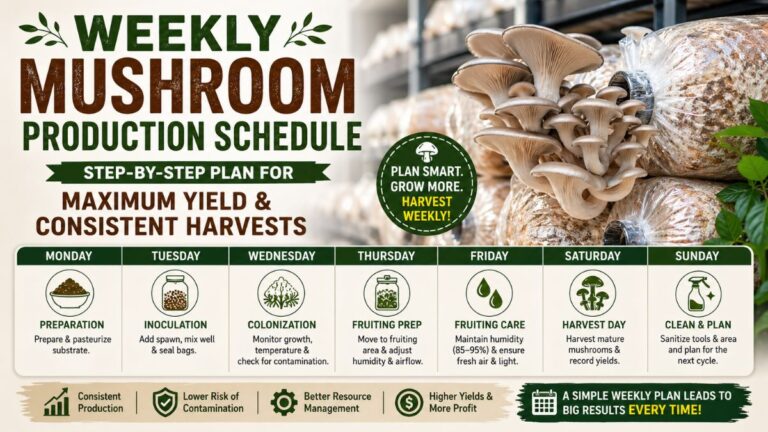
Step 5: Track and Optimize Your Schedule
Use tools like this Mushroom Harvest Interval Calculator to fine-tune your timing:
https://mushroomcalculators.com/tool/mushroom-harvest-interval-calculator/
Expert Tips, Benefits, and Common Mistakes
Key Benefits of Proper Harvest Timing
- Higher yield per flush
- Improved mushroom quality for sale or consumption
- Reduced waste and spoilage
- Consistent production cycles
Pro Tips for Best Results
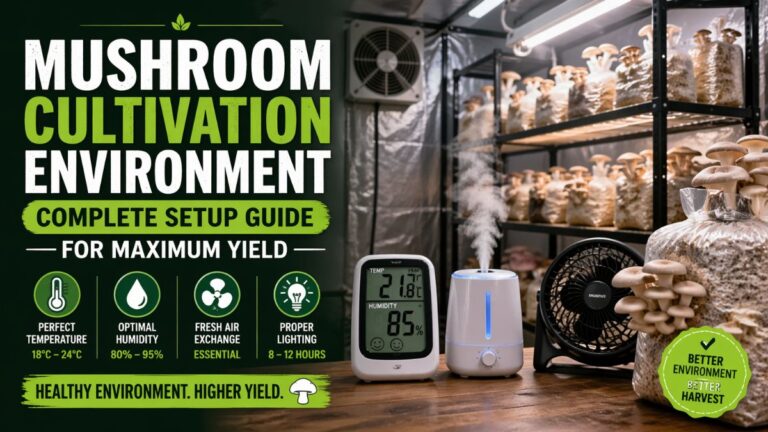
- Maintain stable humidity (80–90%)
- Ensure proper ventilation to avoid CO₂ buildup
- Harvest in cooler parts of the day for freshness
- Keep a harvest log to refine your optimal mushroom picking time for yield
Common Mistakes to Avoid
- Waiting too long: Leads to over-mature mushrooms
- Harvesting too early: Reduces size and weight
- Ignoring environmental changes: Temperature and humidity affect timing
- Rough handling: Damages future growth
Safety Precautions
- Always identify edible species correctly
- Avoid consuming contaminated or moldy mushrooms
- Store harvested mushrooms in a cool, dry place
FAQs:
1. How often should I harvest mushrooms?
Most mushrooms require daily monitoring during fruiting. Harvesting may be needed every 12–24 hours depending on growth speed.
2. What happens if I delay harvesting?
Delayed harvesting can cause overgrowth, spore release, and reduced quality, making mushrooms less desirable for sale or consumption.
3. Can I harvest mushrooms multiple times from the same substrate?
Yes! Most substrates produce multiple flushes. Proper timing improves yields across each cycle.
Conclusion:
Mastering the Mushroom Harvest Interval isn’t just about timing—it’s about understanding your mushrooms’ life cycle and responding with precision. By observing growth closely, harvesting at the right moment, and avoiding common mistakes, you can significantly boost both yield and quality.