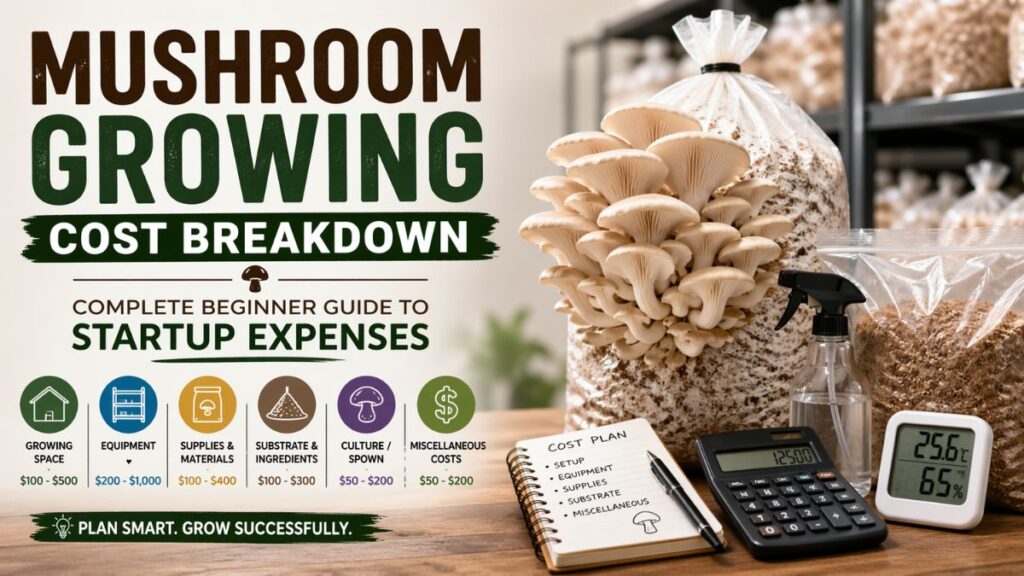
Starting your own mushroom farm might sound expensive—but what if you could begin with a surprisingly low investment? Understanding the Mushroom Growing Cost Breakdown is the key to turning this idea into a profitable reality. Whether you’re a hobby grower or planning a small business, knowing exactly where your money goes helps you avoid costly mistakes and scale smartly from day one.
In this guide, you’ll discover the real startup costs, hidden expenses, and practical steps to launch your mushroom-growing journey with confidence.
Understanding the Core Costs of Mushroom Cultivation
Before you invest, it’s important to break down the essential components that make up your startup expenses.
Substrate and Growing Medium Costs
The substrate is where mushrooms grow, and it’s one of the most important expenses.
- Common options: straw, sawdust, coco coir
- Cost range: low to moderate depending on availability
- Bulk buying can significantly reduce expenses
For beginners, choosing locally available materials can keep your low cost mushroom farming setup affordable.
Mushroom Spawn Investment
Spawn is essentially the “seed” for your mushrooms.
- Grain spawn or sawdust spawn options
- Typically costs more than substrate
- Quality spawn ensures better yields and fewer failures
Never compromise on spawn quality—it directly affects your harvest success.
Equipment and Setup Expenses
You don’t need a high-tech lab to start, but some basic equipment is essential.
- Grow bags or containers
- Humidifier or misting system
- Thermometer and hygrometer
- Shelving or racks
This is where your mushroom cultivation startup expenses can vary widely depending on your scale.
Step-by-Step Guide to Starting on a Budget
If you’re worried about costs, here’s how to start smart without overspending.
Step 1: Start Small and Scale Gradually
Begin with a small batch to test your process.
- Reduces initial investment
- Helps you learn without big risks
- Ideal for beginners exploring how much does it cost to grow mushrooms at home
Step 2: Optimize Your Growing Space
You don’t need a commercial farm right away.
- Use a spare room, balcony, or shed
- Maintain proper ventilation and humidity
- Keep the space clean to avoid contamination
Step 3: Track Every Expense
Keeping records helps you understand your real costs.
- Substrate and spawn purchases
- Utility bills (water, electricity)
- Equipment upgrades
Use tools like this Mushroom Growing Cost Calculator to estimate and manage your budget effectively.
Smart Tips to Reduce Costs and Maximize Profits
Once you understand your expenses, the next step is optimizing them.
Best Practices for Cost Efficiency
- Buy materials in bulk to lower per-unit cost
- Reuse and recycle containers when possible
- Choose high-yield mushroom varieties
These strategies improve your small scale mushroom farming cost analysis and boost profitability.
Common Mistakes to Avoid
Many beginners lose money due to simple errors:
- Overinvesting in unnecessary equipment
- Ignoring hygiene and sanitation
- Using poor-quality spawn
Avoiding these mistakes can save you both time and money.
Safety and Hygiene Precautions
Mushroom cultivation requires a clean environment.
- Always sanitize tools and surfaces
- Wear gloves and masks when handling spawn
- Prevent contamination by limiting exposure
Proper hygiene not only protects your crop but also ensures consistent results.
FAQs:
1. How much does it cost to start mushroom farming at home?
It can range from $30 to $200 depending on your setup size, materials, and equipment.
2. What is the most expensive part of mushroom cultivation?
Spawn and initial equipment are usually the biggest costs, but they’re essential for quality yields.
3. Can I start mushroom farming with a low budget?
Yes, with a low cost mushroom farming setup, you can begin small and scale as you gain experience.
Final Thoughts:
Mushroom farming doesn’t have to drain your wallet. With a clear understanding of the Mushroom Growing Cost Breakdown, you can start small, learn quickly, and grow efficiently. The key is to invest wisely, avoid common pitfalls, and continuously optimize your process.